

By IQ Latino Newsroom
Experts debate whether this financial double package worth 40 billion dollars was the key to Milei’s unexpected win in the mid-term elections in Argentina. Economists doubt Argentina can pay back, and Political leaders in the U.S. questioned Trump’s priorities as a betrayal to his America First platform.
According to a report by the Financial Times, U.S. Treasury Secretary Scott Bessent announced a $20 billion financing package to help Argentina meet its near-term debt payments. The plan seeks to mobilize capital from private banks and sovereign wealth funds, separate from another $20 billion currency swap line unveiled a week earlier. Together, the two measures amount to a $40 billion U.S.-backed rescue, making it the largest bilateral financial support Argentina has received from Washington since 2018—when former President Donald Trump personally backed a record-setting $57 billion IMF loan to the government of then-President Mauricio Macri.

Argentina’s Heavy Burden with the IMF
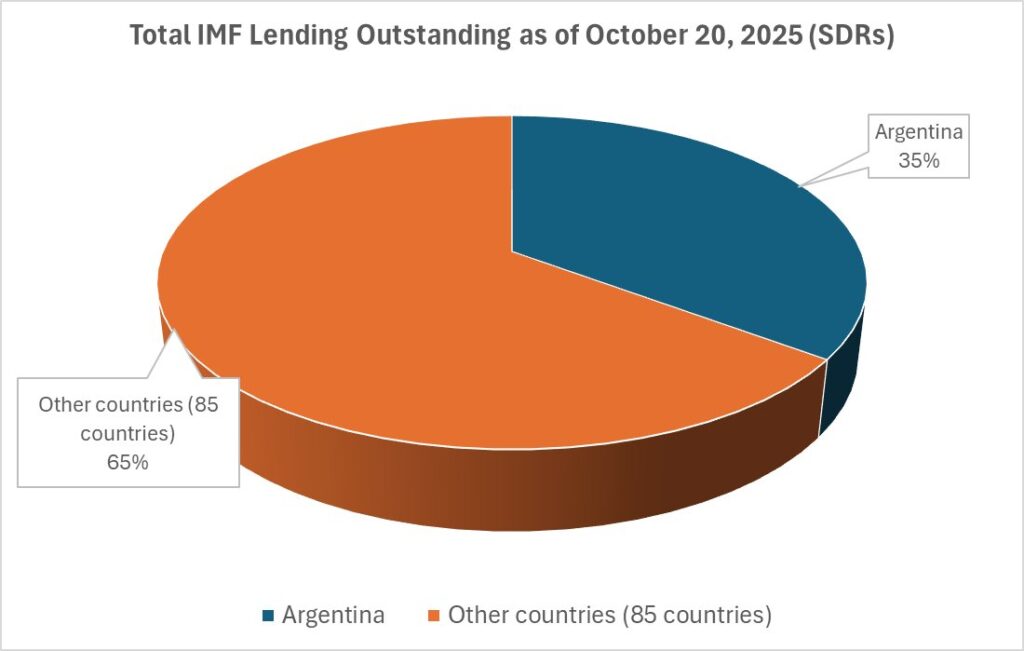
Argentina already represents an extraordinary exposure for the International Monetary Fund. Economist and University of Colorado Professor Francisco Rodríguez noted that Argentina accounts for 35 percent of all IMF lending outstanding, meaning that one country alone absorbs over a third of the Fund’s global portfolio. The IMF’s exposure to Argentina is now 46 times larger than the average loan to other borrowing nations, a concentration that analysts describe as ‘unprecedented and risky.’
A Political Flashpoint in the U.S.
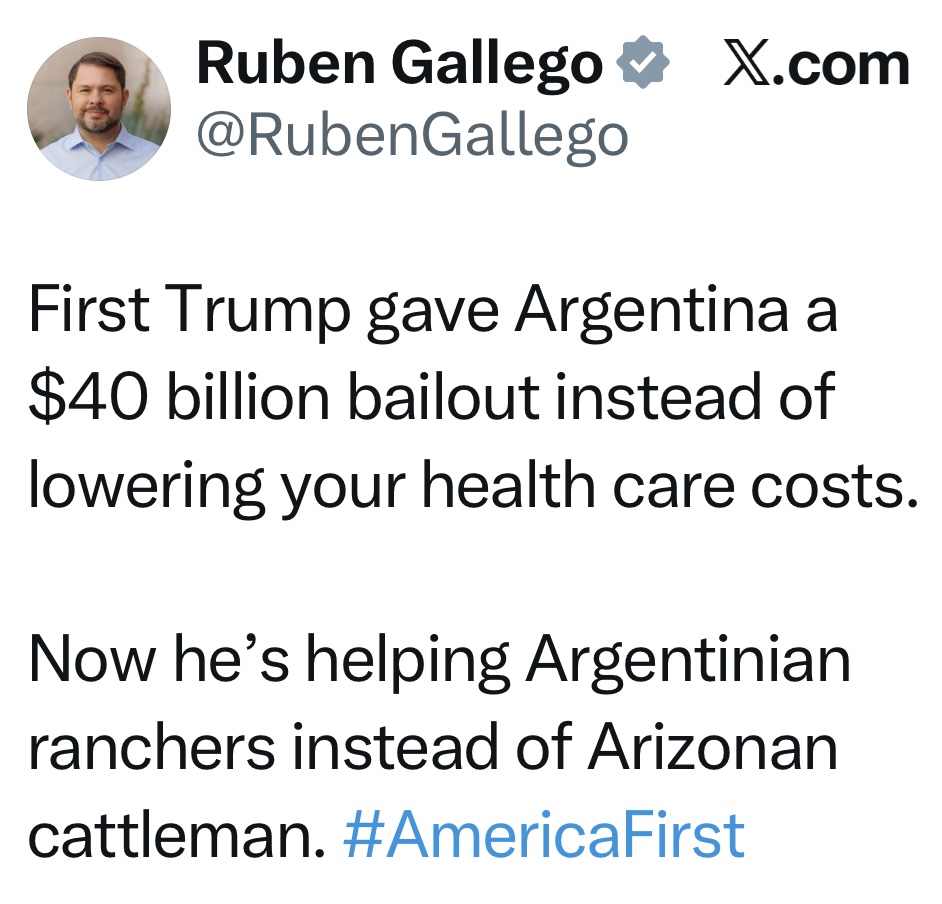
The new rescue package has drawn fire from U.S. lawmakers. Democratic Party Senator Ruben Gallego criticized the move on X, writing: ‘First Trump gave Argentina a $40 billion bailout instead of lowering your health care costs. Now he’s helping Argentinian ranchers instead of Arizonan cattlemen. #AmericaFirst.’ In a separate exchange with reporters, Trump defended his decision, saying: ‘Look, Argentina is fighting for its life, young lady. You don’t know anything about it. You understand what that means? They are dying.’
Argentina’s Midterm Election Results
The new political backdrop gives added significance to this U.S. financial support. On Sunday, President Javier Milei’s coalition ‘La Libertad Avanza’ scored a resounding victory in Argentina’s 2025 legislative midterm elections, securing 40.65% of the vote and 64 seats in the Chamber of Deputies, according to official data from the Ministerio del Interior. The main opposition, Fuerza Patria, came a distant second with 24.3% and 31 seats, while smaller regional alliances such as Provincias Unidas and Frente de Izquierda achieved limited representation.
In the Senate, where one-third of seats were contested, La Libertad Avanza doubled its presence from 6 to approximately 12 seats, strengthening Milei’s ability to push his legislative agenda. Though still short of a majority in either chamber, this consolidation of power gives his administration greater leverage to enact the radical economic reforms promised since his election.
Political analyst Carmen Beatriz Fernández described Milei’s win as ‘a clear endorsement of his alliance with Trump,’ arguing that the U.S. President’s recent financial backing and political endorsement were decisive in shifting voter sentiment just weeks before the vote. ‘The result should also be read as a victory for Trump,’ Fernández wrote, calling the U.S. intervention ‘a game changer.’
However, other observers interpret the election outcome differently. Adriana Morán, a journalist and social media commentator based in Venezuela emphasized through X that the result must also be understood as a referendum on the decline of Kirchnerism, which still dominates much of the Peronist coalition and Fuerza Patria. ‘Let’s see things as they are,’ she posted. ‘Argentines are tired of Kirchnerism, and they have every right to be. I wish them the best.’ This alternative reading suggests that the electorate’s rejection of the old political order—not merely Trump’s endorsement or Milei’s libertarian rhetoric—was the decisive factor behind the midterm surge.
An Unusual Move for the U.S. Treasury
What makes this episode unique is the form of intervention. Reports suggest that the U.S. Treasury has already begun buying Argentine pesos directly, an unprecedented step for Washington outside the G7. Analysts warn that this could set a risky precedent, blurring the line between IMF-led multilateral assistance and direct bilateral bailouts. Meanwhile, questions remain about how the new facility will be structured: Will it rank senior to IMF or private bondholder claims? What collateral or guarantees will Argentina offer? Could the U.S. end up indirectly underwriting another wave of Argentine debt?
A Political Alignment Beyond Economics
Beyond economics, Trump’s support for Argentina reflects a political alignment with President Milei—both leaders self-identify as anti-establishment, nationalist, and ‘anti-globalist,’ despite their willingness to rely on massive international financing. For Trump, extending a financial lifeline to Milei just before Argentina’s midterm elections can be interpreted as an overt show of ideological solidarity, helping consolidate a far-right bloc in the Americas. Yet the move also exposes a contradiction at the heart of Trump’s ‘America First’ doctrine: while his MAGA base advocates isolationism and cutting foreign aid, his administration has funneled tens of billions of dollars abroad to rescue an ally whose agenda mirrors his own. As Milei celebrates his sweeping midterm win—and a strengthened position in both chambers of Congress—the question lingers: is America First evolving into an ‘Ideology First’ foreign policy?