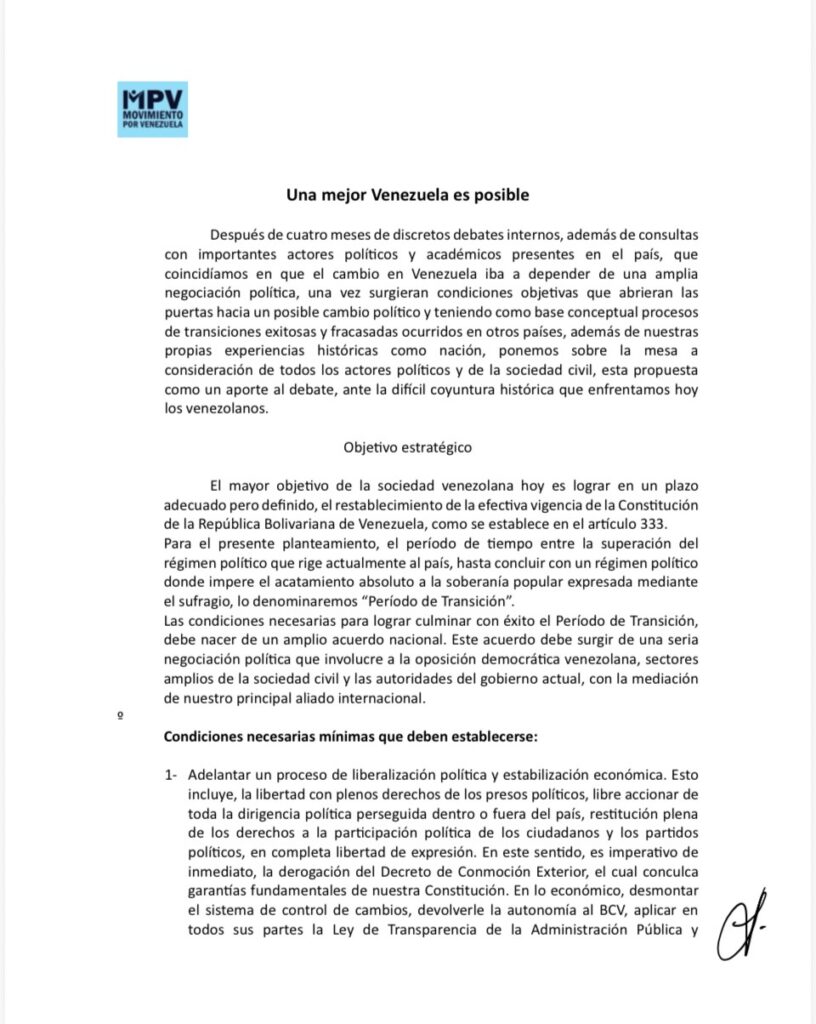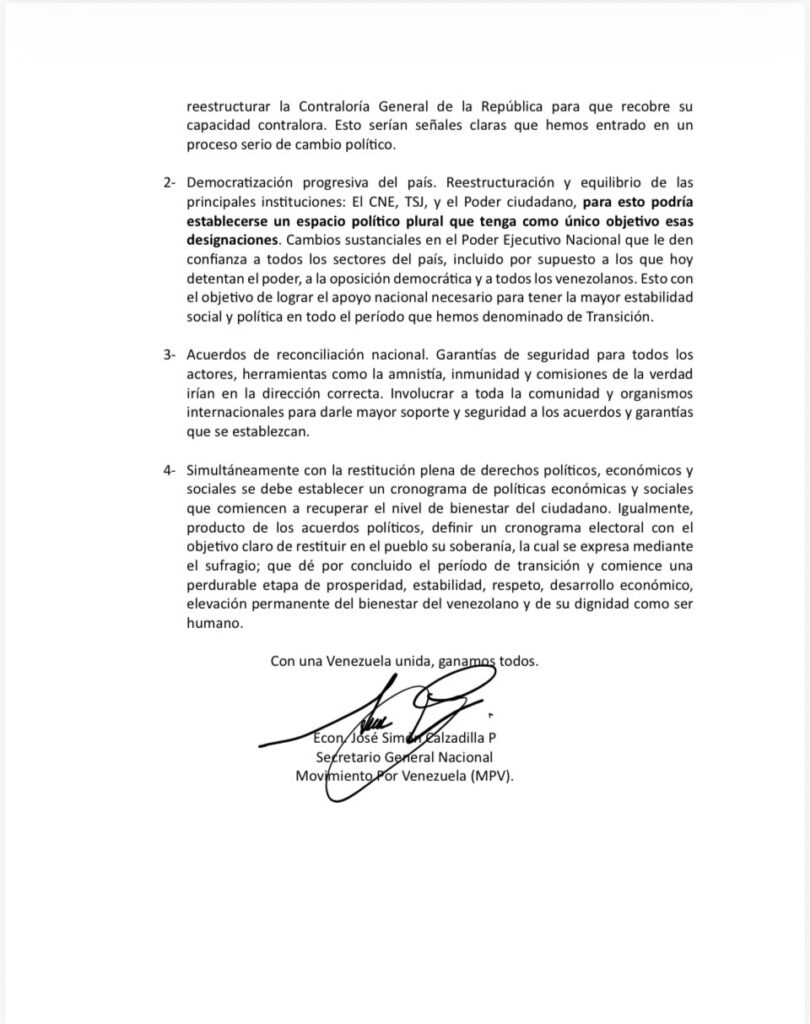
An interview with Andrés Caleca, leader of the Movement for Venezuela (MPV): “Without reconciliation, no transition is sustainable. We propose security guarantees for all actors, along with transitional justice tools such as amnesties, immunities, and truth commissions. This is not about impunity; it is about transitional justice.“
Andrés José de San Bosco Caleca Pacheco (born July 15, 1954, Caracas) is a Venezuelan economist, public administrator, and political leader with a long record of service in national institutions. He served as President of the National Electoral Council (CNE) in 1999 and is widely recognized for his tenure as President of Ferrominera del Orinoco, a cornerstone of Venezuela’s basic industries within the Guayana industrial complex, where he was appointed in 1993 under President Ramón J. Velásquez and confirmed under President Rafael Caldera. During this period, he oversaw key operational directions of the iron and steel sector in a strategically significant economic segment.
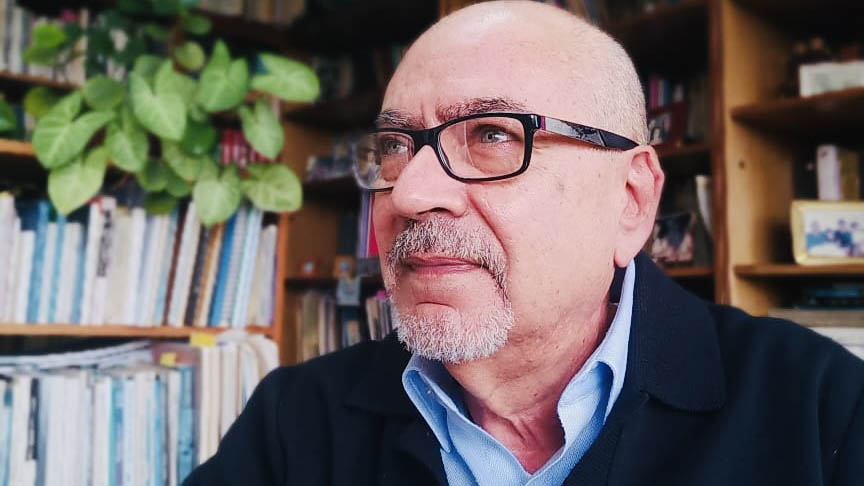
Caleca also re-entered the national political arena in 2023 as a presidential candidate in the opposition primaries held in Venezuela, running as an independent with the backing of the Movimiento por Venezuela (MPV). While he did not secure the nomination, his campaign highlighted democratic participation and institutional reform. The IQ Latino team had the opportunity of talking to Andrés Caleca about the recent proposal MPV made for national discussion at a critical moment.
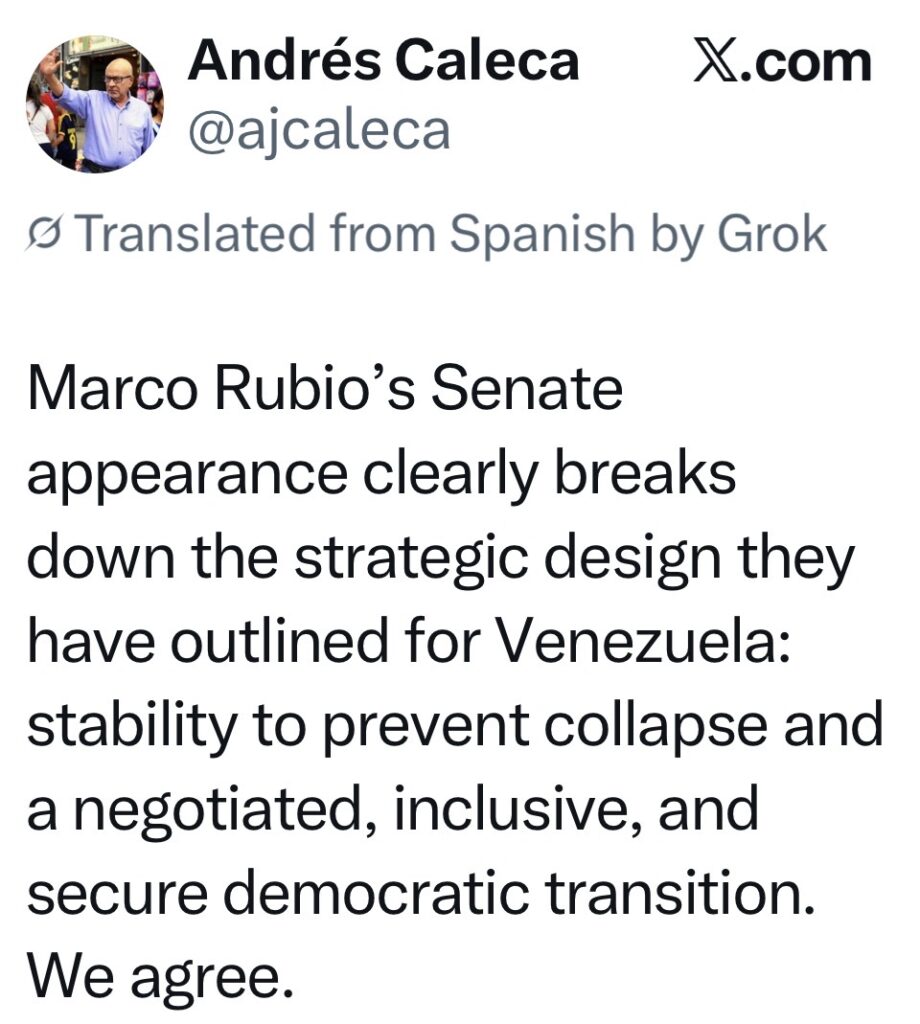
The concern is that Venezuela’s historic reliance on oil and the entrenched divisions of political sectarianism could hinder efforts to achieve a genuine and sustainable democratization. He worries that if political strategies focus narrowly on energy interests or polarizing agendas, they risk sidelining the inclusive political reforms the country urgently needs. However, Caleca noted that the declaration of intent articulated by Secretary of State Marco Rubio during his testimony before the U.S. Senate this week — emphasizing the goal of guiding Venezuela toward legitimate democratic elections and a stable transition — offered a degree of clarity and hope about the possibility of a negotiated process.
In light of this, Caleca advocates that the MPV’s proposal for a negotiated, constitutional, and inclusive transition be taken seriously both by international partners and by Venezuelan political forces. He insists that leadership on both sides — of government and of the opposition — must commit to dialogue that restores constitutional order and broad participation, rather than allowing geopolitical interests or short-term tactical concerns to dominate the roadmap for Venezuela’s democratic future.
IQL: Andrés, MPV has recently put forward a proposal for a political transition in Venezuela. How did this initiative come about?
Andrés Caleca: It emerged after several months of serious and discreet internal discussions, as well as consultations with key political and academic actors who remain in the country. We all reached the same conclusion: meaningful change in Venezuela will depend on a broad political negotiation once objective conditions open the door to that possibility. This proposal is a responsible contribution to the national debate, grounded in both successful and failed international transition experiences, as well as in Venezuela’s own historical trajectory.
IQL: What is the core strategic objective of this proposal?
Andrés Caleca: The objective is very clear: to restore, within an adequate but clearly defined timeframe, the effective validity of the Venezuelan Constitution, as mandated by Article 333. We define the period between overcoming the current political regime and the full restoration of popular sovereignty through free elections as the Transition Period. This period must be clearly delimited and oriented toward returning decision-making power to the Venezuelan people.
IQL: You emphasize that this transition must be based on a national agreement. Who should be involved?
Andrés Caleca: It must be a broad agreement, without artificial exclusions. It should involve the democratic opposition, significant sectors of civil society, and the authorities currently in power. All of this must occur through a serious political negotiation, with credible international mediation. What we are proposing is neither surrender nor imposition, but an orderly path forward that spares Venezuelans further suffering.
IQL: What are the minimum conditions required for this Transition Period to be viable?
Andrés Caleca: We outline four essential conditions. First, an immediate process of political liberalization and economic stabilization: the full release and restoration of rights of political prisoners; freedom of action for persecuted political leaders inside and outside the country; full restoration of political rights for citizens and parties; and genuine freedom of expression. This also requires the immediate repeal of the State of External Emergency Decree, which violates fundamental constitutional guarantees. On the economic front, dismantling exchange controls, restoring Central Bank autonomy, fully implementing the Public Administration Transparency Law, and restructuring the Office of the Comptroller General are indispensable. Without these signals, there can be no credibility.
IQL: What role do institutions play in this transition?
Andrés Caleca: A central one. We propose a progressive democratization of the country through the rebalancing and restructuring of key institutions—the National Electoral Council, the Supreme Court, and the Citizen Power branch. This could be achieved through a plural political mechanism created exclusively for those appointments. In addition, substantial changes in the National Executive are required to build confidence across all sectors of society, including those currently in power, the democratic opposition, and Venezuelan citizens at large.
IQL: Reconciliation is often the most sensitive issue in transition processes. How does your proposal address it?
Andrés Caleca: Without reconciliation, no transition is sustainable. We propose security guarantees for all actors, along with transitional justice tools such as amnesties, immunities, and truth commissions. This is not about impunity; it is about transitional justice. The active involvement of the international community and multilateral organizations is essential to provide credibility, oversight, and security for the agreements reached.
IQL: How does the political transition connect with social and economic recovery?
Andrés Caleca: They are inseparable. Alongside the full restoration of political, economic, and social rights, a clear timetable of economic and social policies must be established to begin restoring citizens’ quality of life. Equally important, the political agreements must define an electoral calendar with the explicit goal of returning sovereignty to the people through the vote—thereby concluding the Transition Period and opening a lasting phase of prosperity, stability, institutional respect, economic development, and the restoration of Venezuelans’ dignity.
IQL: Finally, what message does MPV want to send to the country?
Andrés Caleca: This is not a partisan or exclusionary proposal. It is an invitation to think about Venezuela as a shared national project. With a united Venezuela, everyone stands to gain.