

New shipment opportunities promise economic gains but threaten one of the planet’s most fragile ecosystems
The world is heating up around the possibility of navigating new commercial shipping routes through the Arctic. Beyond the geopolitical implications of this development, the scope of the discussion confirms that the planet’s temperatures are changing at a sustained rate.
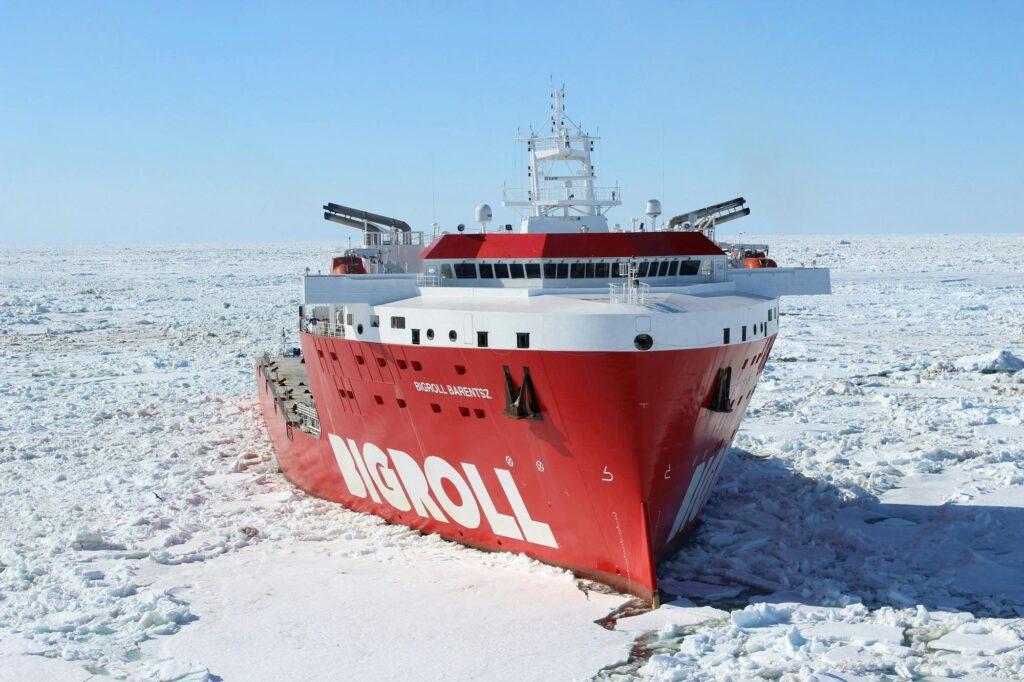
As the retreat of sea ice makes areas of the Arctic Ocean navigable for longer periods each year, the opportunities for trade and resource exploitation are raising urgent ecological questions.
New Routes, New Problems
On Sept. 17, 2025, the National Aeronautics and Space Administration (NASA) stated that, with the end of summer approaching in the Northern Hemisphere, the extent of sea ice in the Arctic shrank to its annual minimum on Sept. 10, according to NASA and the National Snow and Ice Data Center. At that moment, “The total sea ice coverage was tied with 2008 for the 10th-lowest on record at 1.78 million square miles (4.60 million square kilometers).”
The agency adds that Arctic ice reached its lowest recorded extent in 2012. “While this year’s Arctic sea ice area did not set a record low, it’s consistent with the downward trend,” said Nathan Kurtz, chief of the Cryospheric Sciences Laboratory at NASA’s Goddard Space Flight Center in Greenbelt, Maryland.
The World Wildlife Fund shows the big picture: “If emissions continue to rise unchecked, the Arctic could be ice-free in the summer by 2040.”
Rising global temperatures have caused Arctic sea ice to thin and retreat, revealing passages that were previously impassable. Among these are the Northern Sea Route along Russia’s coast and the Northwest Passage north of Canada.
These routes could drastically shorten shipping times between Europe and Asia, offering economic advantages over traditional lanes like the Suez or Panama canals.
But while economic gains may look appealing, shipping in the Arctic carries serious environmental consequences. Experts warn that while the Arctic offers potential economic benefits, frequent commercial navigation is not in the planet’s best interest.
1) Accelerated ice melt from pollution (black carbon)
According to the International Council on Clean Transportation, ships release black carbon, a type of soot that falls on snow and ice and makes them darker. Black carbon “has a 100-year global warming potential 900 times greater than that of carbon dioxide.”
2) Threats to wildlife and fragile ecosystems
The Arctic is a quiet and delicate environment, and many animals depend on that stability. Noise from ships can disturb whales, seals, and walruses, affecting how they communicate, find food, and migrate.
3) Risk of oil spills in an extremely sensitive environment
As Petro Industry News explains, “In deep, icy cold water, the environmental consequences of a major oil spill could be much worse than in milder drilling environments.” The region is remote, emergency resources are limited, and cold temperatures slow the natural breakdown of oil.
4) Introduction of invasive species
Ships can carry small organisms in their ballast water from one part of the world to another. This can disrupt local food chains and damage fisheries that communities depend on.
5) Air pollution and climate feedback
Ships also emit greenhouse gases and other pollutants that contribute to warming and ocean damage. This cycle increases the environmental impact both in the Arctic and across the planet.
The High-Stakes Arctic Gamble
As countries race for faster trade routes, oil, gas, minerals, and strategic positions, they face a big question: how to use the Arctic without causing lasting environmental damage. The region offers huge economic opportunities, but it is also one of the most fragile ecosystems on Earth, where accidents or pollution can have long-term effects.
Rules like limiting navigation to certain seasons, strict environmental standards for ships, and international oversight can help reduce the risks. Still, scientists warn that even careful development is risky because the Arctic is already changing quickly due to warming.
The debate over Arctic shipping shows that climate disruptions aren’t just an environmental issue. They are reshaping global trade, geopolitics, and the future of energy, forcing governments to balance short-term gains against long-term planetary costs.
This article was provided by VoLo Foundation, a private nonprofit organization with a mission to accelerate change and global impact by supporting science-based climate solutions, enhancing education, and improving health.