

Diplomatic normalization, economic reopening, regional diplomacy, and prisoner releases suggest cautious movement toward political and institutional change.
Washington / Caracas Desks — Week of March 7–13, 2026
A series of legal, diplomatic, and economic developments this week suggests that Venezuela’s evolving transition is entering a more operational phase, with implications for international financial markets, regional diplomacy, and the country’s gradual political opening.
The most consequential development came through a filing before the U.S. District Court for the Southern District of New York, where the United States stated that it recognizes Delcy Rodríguez as the sole Head of State able to act on behalf of Venezuela in litigation involving Venezuelan assets.
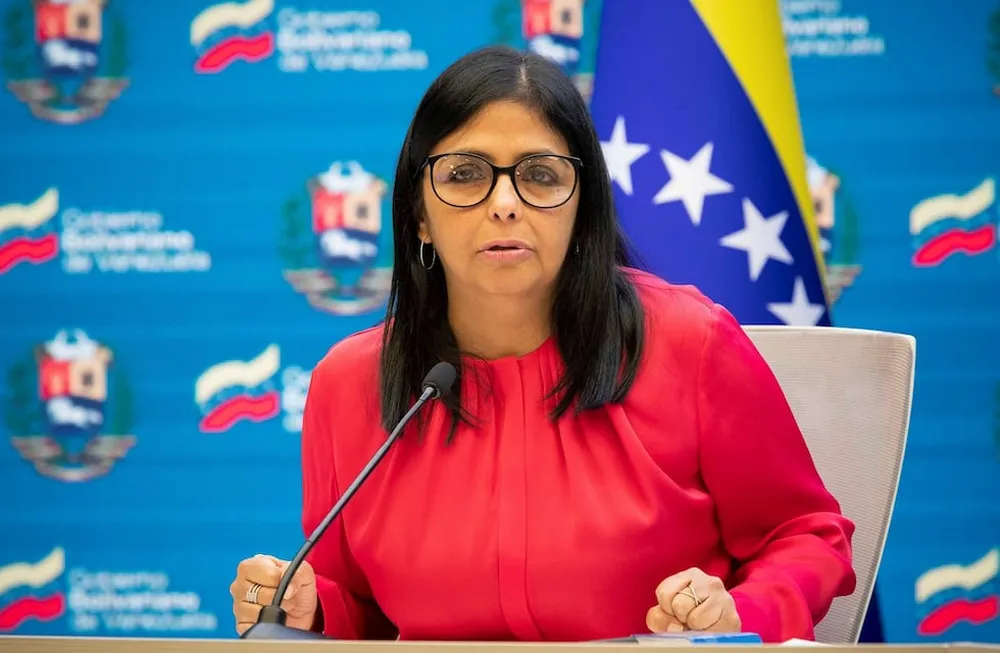
The filing effectively converts Washington’s recent diplomatic shift toward Caracas into a legal recognition posture, with implications for sovereign representation, international financial negotiations, and disputes over Venezuelan state assets abroad.
The decision follows the March 5 announcement that the United States and Venezuela would restore diplomatic and consular relations, marking a major recalibration in bilateral relations after years of political rupture.
While Washington has framed the engagement as part of a broader effort to support stability and economic recovery in Venezuela, U.S. officials have emphasized that sanctions authorities and financial oversight mechanisms remain in place.
Together, these developments suggest a dual-track strategy: diplomatic normalization alongside continued leverage over Venezuela’s political and economic transition.
Markets react to political shift
Financial markets responded quickly to the evolving diplomatic environment.
Venezuela’s defaulted sovereign bonds extended their rally this week, with the country’s 2027 notes trading above 47 cents on the dollar, their highest level since 2017. Bonds issued by state oil company PDVSA also posted sustained gains, reflecting growing investor expectations that a sovereign debt restructuring process may eventually become feasible as questions surrounding political recognition begin to resolve.
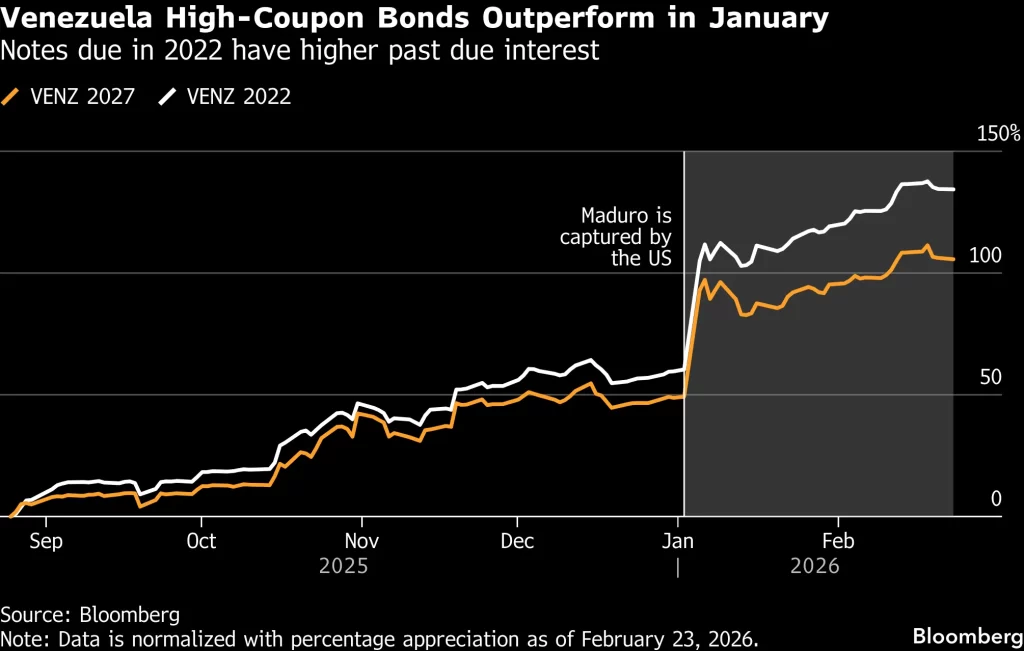
Market analysts note that Venezuelan debt instruments increasingly trade as a proxy for future oil revenues. Rising global crude prices amid geopolitical tensions have reinforced the recent market optimism.
For investors, Washington’s legal recognition of Rodríguez removes one of the principal uncertainties that had complicated potential negotiations over Venezuela’s external debt.
Energy and mining opening accelerate
Energy diplomacy remains the central pillar of Venezuela’s renewed engagement with international partners.
Caracas is advancing reforms aimed at attracting foreign investment into both the hydrocarbons and mining sectors, including regulatory changes designed to expand private participation and strengthen legal protections for international operators.
International companies have already begun positioning themselves. Spanish energy company Repsol recently signed agreements to expand natural gas production at the Cardón IV offshore project, one of Venezuela’s most promising energy assets. Other companies, including Chevron and Shell, are also exploring opportunities tied to Venezuela’s reopening energy sector.
At the same time, Venezuela’s National Assembly is reviewing legislation designed to broaden foreign participation in the mining industry, including longer concession periods and the introduction of international arbitration mechanisms.
The United States has also authorized limited transactions involving Venezuelan gold produced by state company Minerven, allowing the first steps toward reintegrating Venezuelan mineral exports into international markets.
U.S. expands sanctions licenses for energy-related activity
In another sign of Washington’s calibrated approach to economic engagement with Venezuela, the U.S. Treasury’s Office of Foreign Assets Control (OFAC) issued updated general licenses GL 46B, 48A, and 49A, expanding the scope of previously authorized activities related to Venezuela’s energy sector. The revised licenses broaden transactions that had been permitted for oil and natural gas operations to now include petrochemical products and certain electricity-related activities, allowing additional commercial operations involving Venezuela’s energy infrastructure. According to the licensing documents, the authorizations continue to operate under the existing U.S. legal and financial compliance framework, maintaining sanctions oversight while permitting a wider range of energy-related transactions.
Regional diplomacy gains momentum
The diplomatic shift between Washington and Caracas is also reshaping Venezuela’s regional engagement, particularly with neighboring Colombia. U.S. recognition of Delcy Rodríguez as the country’s acting head of state has clarified the diplomatic framework under which regional governments are now engaging Caracas.
A highly anticipated meeting between Rodríguez and Colombian President Gustavo Petro, scheduled near the Cúcuta border crossing, was postponed at the last minute, with both governments citing “force majeure” without providing further details.
The meeting had been expected to focus on border security, trade normalization, and the reactivation of commercial and economic exchange between Venezuela and Colombia, including energy cooperation and the potential export of Venezuelan natural gas to Colombia.
Some media reports suggested Venezuelan authorities raised security concerns, though this explanation was not formally confirmed in official statements announcing the postponement.
Earlier in the week, Petro held a phone call with Donald Trump, during which the leaders discussed the importance of the planned meeting and broader efforts to revive cross-border commerce and economic cooperation.
Despite the postponement of the presidential encounter, the bilateral agenda continued moving forward. Several members of Petro’s cabinet traveled to Caracas to continue discussions with Venezuelan counterparts on security, trade, and energy cooperation, effectively turning the planned summit into a ministerial-level working session ahead of a future presidential meeting.
The continued engagement underscores the strategic importance both governments place on restoring border trade, security coordination, and energy integration after years of strained relations.
Amnesty and political prisoner releases continue
Developments on the political and human-rights front also remained closely monitored this week.
Implementation of the Amnesty Law for Democratic Coexistence continued through judicial review processes, producing what human-rights organizations describe as the most significant reduction in Venezuela’s political prisoner population in several years, however, the controversy about its exclusions and scope continues.
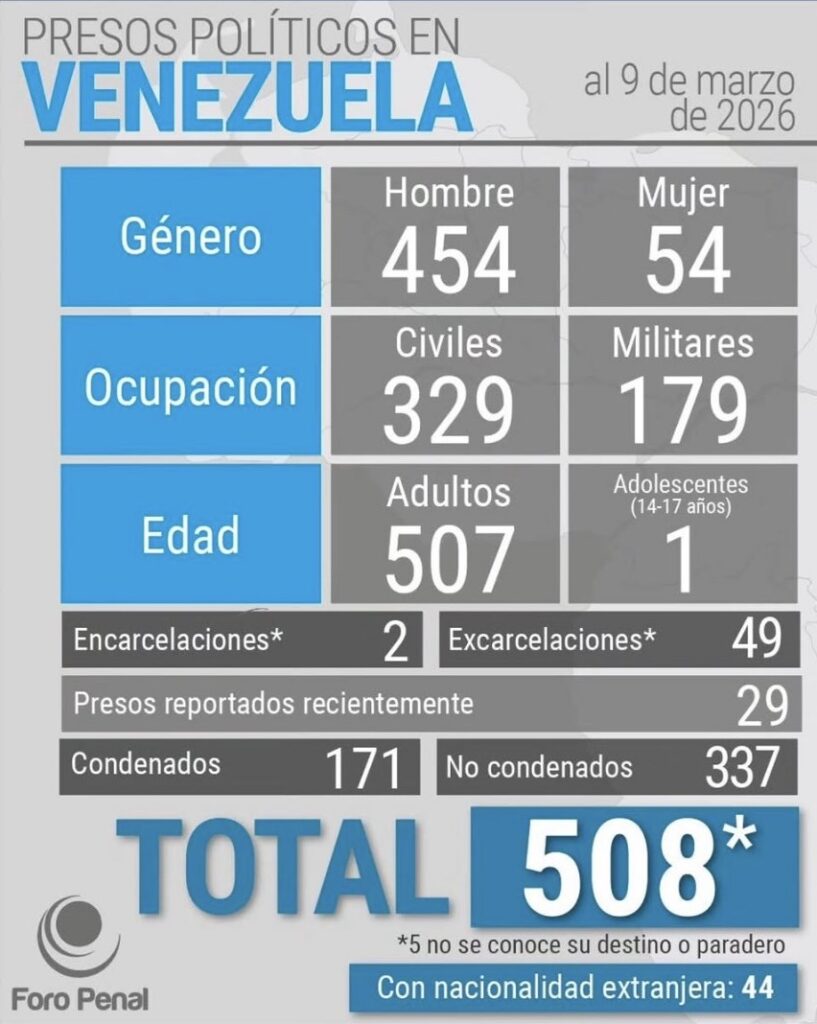
According to monitoring by Foro Penal, at least 670 political prisoners have been released since January 8, while approximately 500 political prisoners remain detained, including civilians, activists, and military personnel.
One of the most visible cases tied to the amnesty process this week remains the release of Rafael Tudares, who had been detained since 2025 on conspiracy-related charges. Tudares is the son-in-law of Edmundo González, the opposition leader widely regarded as the winner of the July 28, 2024 presidential election, who is now living in exile in Madrid. However, a judicial decision also introduced friction in the implementation of the amnesty process. A Venezuelan court denied the application of the Amnesty Law for Democratic Coexistence in the case of Perkins Rocha, a close ally of María Corina Machado, prompting criticism from opposition figures and legal analysts who view the ruling as a potential setback for the law’s broader application. Rocha publicly rejected the decision and announced he would file an immediate appeal, arguing that his case falls squarely within the scope of the amnesty provisions. Observers say the outcome of the appeal could become an early test of how consistently the new law will be implemented across politically sensitive cases. A broader question emerges with this and similar cases, according to some observers, whether some cases not included under the amnesty statute will be part of a complementary -and needed- policy of executive pardons, or case dismissals with prejudice by the Attorney General. This together with larger transitional justice issues remain an outstanding part of the complex process Venezuela is undergoing. Human-rights organizations emphasize that be the release process beyond amnesty remains gradual and case-by-case, meaning additional detainees may be freed as courts continue reviewing individual cases.
Separately, Jorge Arreaza, chairman of the National Assembly’s Special Commission overseeing the implementation of the Amnesty Law, reported that the commission has received 12,233 petitions requesting the application of the law. According to the commission’s balance, 247 people previously deprived of liberty have been released, while 7,407 individuals who were under precautionary judicial measures have benefited from the removal of those restrictions, bringing the total number of full liberties granted under the law to 7,654 people.
National Assembly reviews candidates for Attorney General and Ombudsman
Parallel to the amnesty process, Venezuela’s National Assembly continued consultations aimed at appointing new permanent authorities for the Attorney General’s Office and the Ombudsman (Defensor del Pueblo), key institutions within the country’s “Citizen Power” branch.
The process follows the recent institutional reshuffle that placed Larry Daniel Devoe as acting Attorney General and Tarek William Saab as interim Ombudsman, while lawmakers review candidate profiles for permanent appointments.
Among the candidates presented for consideration is Magaly Vásquez, a respected constitutional and criminal lawyer who serves as Secretary General of the Universidad Católica Andrés Bello (UCAB) and previously served as Dean of the university’s Law School.
Her candidacy has drawn attention within legal and academic circles and is viewed by some observers as an effort to bring a respected academic profile into the leadership of the Public Ministry as Venezuela’s institutions undergo cautious reform.
Other candidates reportedly include prosecutors, legal scholars, and former judicial officials, reflecting an attempt by lawmakers to project institutional renewal while maintaining continuity within the state apparatus.
Political reactions
Political reactions to these developments have been cautious but constructive.
Former presidential candidate Enrique Márquez stated that the credibility of Venezuela’s transition will depend on transparent institutional appointments and the continued release of political prisoners.
Márquez has argued that reconciliation must combine amnesty measures, judicial restructuring, and guarantees for political participation, warning that partial reforms could undermine confidence in the country’s transition.
An evolving transition — and unresolved political leadership
Taken together, developments this week suggest Venezuela is entering a controlled and gradual transition, marked by diplomatic normalization, economic reopening, and limited political liberalization.
Washington’s legal recognition of Rodríguez provides a framework for engagement with Venezuelan authorities, while energy agreements and financial market reactions highlight the economic stakes surrounding the country’s reintegration into global markets.
Another figure closely watching the unfolding process is María Corina Machado, who has remained active internationally while signaling that her political role in Venezuela is far from over. During a visit to Chile for the inauguration of President José Antonio Kast, Machado said she intends to return to Caracas “in due time” as part of what she described as a broader “Grand National Agreement” to guide Venezuela’s political reconstruction.
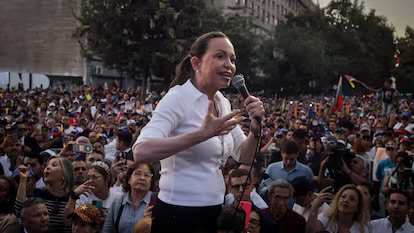
Her remarks come amid reports that President Donald Trump has privately advised her not to return to Venezuela yet, reflecting the delicate balance between Washington’s current engagement with the government in Caracas and the expectations of the opposition movement that claims victory in the 2024 presidential election.
Whether these parallel political tracks ultimately converge into a negotiated transition remains one of the central questions shaping Venezuela’s uncertain path forward.
Labor unrest reaches the National Assembly
Labor protests also emerged this week as a visible reminder of the profound social pressures underlying Venezuela’s political transition. Hundreds of workers, retirees, teachers and union leaders marched toward the National Assembly in Caracas demanding an immediate increase in wages and pensions, which have remained frozen for nearly four years. Protesters were ultimately able to deliver a formal petition to the leadership of the Assembly, and lawmakers met with representatives of the demonstrators to receive their demands.
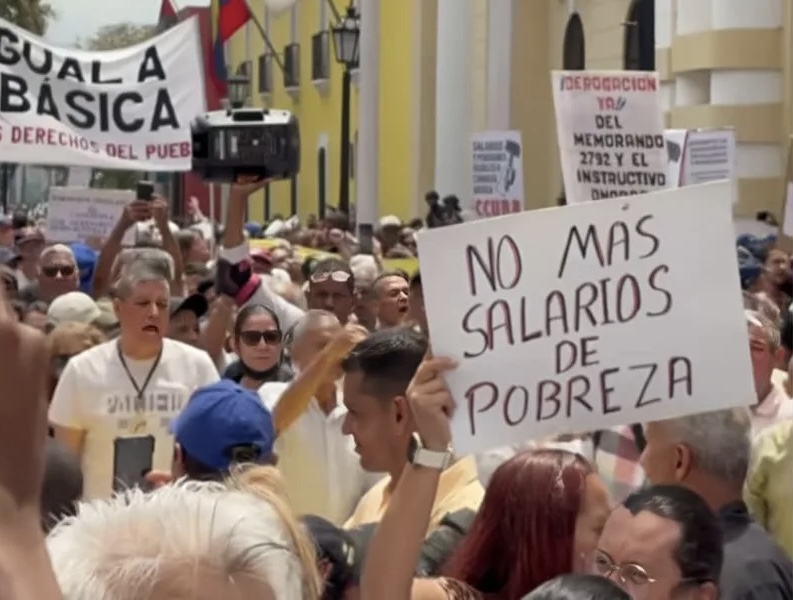
The protests reflect the dramatic deterioration of Venezuela’s wage structure after years of economic collapse and currency devaluation. The statutory minimum salary remains fixed at 130 bolívares per month, unchanged since March 2022 and now equivalent to less than $0.30, effectively rendering it symbolic. While many public-sector workers receive additional income through government bonuses, these payments do not count toward pensions or other labor benefits. Average public-sector income is estimated at roughly $160 per month, while private-sector wages average about $237, according to independent economic estimates.
The renewed mobilization underscores a structural challenge for the country’s transition: without political mediation or economic policy responses capable of restoring real wages, the collapse of labor income risks becoming one of the most immediate sources of social pressure on Venezuela’s fragile political opening.