

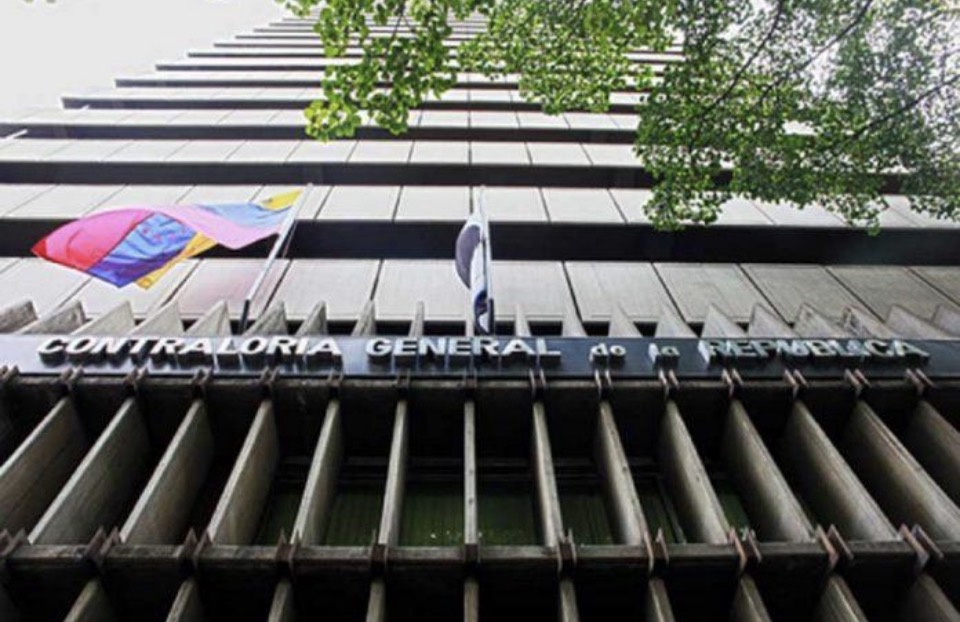
In Venezuela, whenever transition and institutional rebuilding are discussed, the conversation almost automatically turns to the electoral authority, the judiciary, or the public prosecutor’s office. This is understandable: without a credible electoral council, independent judges, and autonomous prosecutors, democracy is impossible. Yet there is another branch of the state that remains largely absent from this debate, despite being essential to any sustainable transition and the future: the comptroller’s authority.
Today, the Office of the Comptroller General does not fulfill its function. It is not an effective oversight body, but rather an institution that oscillates between irrelevance and political abuse. This distortion has had profound consequences. The most significant corruption scandals in Venezuela’s contemporary history—particularly within PDVSA, whose financial collapse is now inseparable from the country’s broader crisis—unfolded under its passive or complicit watch. There were no timely warnings, no independent audits, and no consistent sanctions. Yet the institution has remained active in one domain: the selective disqualification of opposition candidates, often based on arbitrary or unproven allegations. This contrast is no accident; it reflects an institution that has been captured.
Amid an incipient economic opening, a number of proposals have begun to emerge that, while pragmatic, underscore the depth of Venezuela’s institutional void. These include the outsourcing of audits for the Central Bank of Venezuela as a condition for operating under OFAC licensing frameworks; the implementation of external oversight mechanisms on oil-related public revenues by the United States; and even the placement and management of Venezuelan funds in U.S. Treasury accounts. These measures may be understandable—and perhaps unavoidable—in the very short term. But they are deeply problematic in their underlying logic. A country that cannot audit itself is, in effect, relinquishing a core dimension of its sovereignty. In this context, the complex web of economic sanctions and licensing regimes surrounding Venezuela has also been justified—not only on political conditionality grounds, but on the lack of trust in the management of public resources. Institutional weakness does not merely erode sovereignty internally; it ultimately legitimizes external control.
History offers clear warnings. The Platt Amendment, in force for 33 years between 1901 and 1934, turned Cuba into a constrained republic, subject to external intervention in its internal affairs. More recently, following the 2003 invasion of Iraq, the country has endured more than two decades of limited sovereignty and significant external influence over its institutions and strategic resources. In both cases, what began as a temporary arrangement evolved into prolonged dependency.
It is no secret that in the United States, since the days of the Monroe Doctrine and its evolving strategic interpretations, there has been a recurring temptation to subordinate the sovereignty of countries in the hemisphere. The national security framework articulated during the Trump administration is a contemporary expression of that perspective. This risk is not merely situational—it remains latent whenever domestic institutions fail and when there is no national commitment to strengthening them.
This is the risk Venezuela faces today. Transition cannot be limited to economic stabilization or the organization of elections. It requires rebuilding the state itself. And that reconstruction necessarily entails establishing a modern, independent, and effective system of fiscal oversight. A functional comptroller’s office must be shielded from political pressures, staffed with top-tier technical talent, and endowed with real auditing and enforcement capacity in critical sectors such as oil, public finance, and state-owned enterprises. It must also embrace new tools: digital traceability of public spending, automated auditing systems, early warning mechanisms, and the use of artificial intelligence to detect corruption patterns in real time.
A national agreement among all political forces to restore the autonomy and strength of the comptroller’s authority would allow for the rapid channeling of significant resources toward rebuilding this institution. This would avoid the need for multi-year expenditures of tens of millions of dollars on foreign private audit firms currently tasked with functions that constitutionally belong to the Comptroller General.
Ultimately, what is needed is a broad political agreement capable of nationalizing the solution to Venezuela’s conflict and restoring constitutional order. Without such an agreement—one that includes a serious plan for institutional reconstruction—Venezuela risks falling into prolonged external tutelage without regaining effective control over its own resources. And without that control, exercised through a credible and independent oversight authority, it will not be possible to develop a coherent economic and monetary policy capable of sustaining a successful transition. Beyond the current oil and mining openings, what is at stake is the ability to build a reliable model of public governance—one that enables stability, investment, and long-term growth with social equity.
This is not only about fighting corruption, though that would already be a major step forward. It is about restoring trust in the state, rebuilding the capacity to manage public affairs under the rule of law, efficiency, and accountability. Without a functioning comptroller, there is no transparency; without transparency, there is no trust; and without trust, there can be no viable economic policy or sustainable transition.
For this reason, any meaningful national agreement must treat the reconstruction of the comptroller’s authority as an immediate and non-negotiable priority. As long as this dimension remains absent, the temptation of external tutelage will persist—and likely grow—along with the risk that Venezuela becomes trapped in a cycle of dependency that could compromise its sovereignty for years, if not decades.
Venezuela’s transition cannot be merely a change of political actors. It must be, above all, a recovery of state capacity. And among those capacities, few are as strategic—and as necessary—as the comptroller’s authority. This is not an abstract or technical task; it is a fundamental political decision. And it rests equally on the leadership of the interim government and on the leadership of the democratic alternative.
Leopoldo Martínez Nucete is an international lawyer and former Venezuelan Congressman. He is the founder of the Center for Democracy and Development in the Americas (CDDA) and served as Senior Counselor at the U.S. Department of Commerce during the Biden administration.