

A Human Rights Test for Venezuela’s Transitional Justice
CDDA Fellows Network / Venezuela Special Alert
May 2026
The tragic case of Víctor Hugo Quero Navas has become one of the clearest and most urgent tests of whether Venezuela’s emerging institutional framework can move beyond rhetoric and deliver truth, accountability, and redress.
Quero was reportedly detained in January 2025 after an arbitrary arrest in Caracas and later held in El Rodeo I. His mother, Carmen Navas, spent approximately 16 months searching for information about his whereabouts. According to recent reporting, Venezuelan authorities later acknowledged that Quero had died in custody months earlier, while his family had continued seeking proof of life and official clarification. El País reported that his body was buried without proper notification to the family, in a grave marked only with a paper sign, and later exhumed as part of the investigation.
The case raises grave allegations and unresolved questions related to forced disappearance, arbitrary detention, unlawful deprivation of liberty, possible torture or cruel treatment, death in state custody, concealment of the body, denial of truth to the family, and potential judicial irregularities after his death. Human rights organizations and civil society actors have demanded an independent investigation and the application of international forensic standards, including the Minnesota Protocol, the global standard for investigating potentially unlawful deaths, including deaths in custody and suspected enforced disappearances.
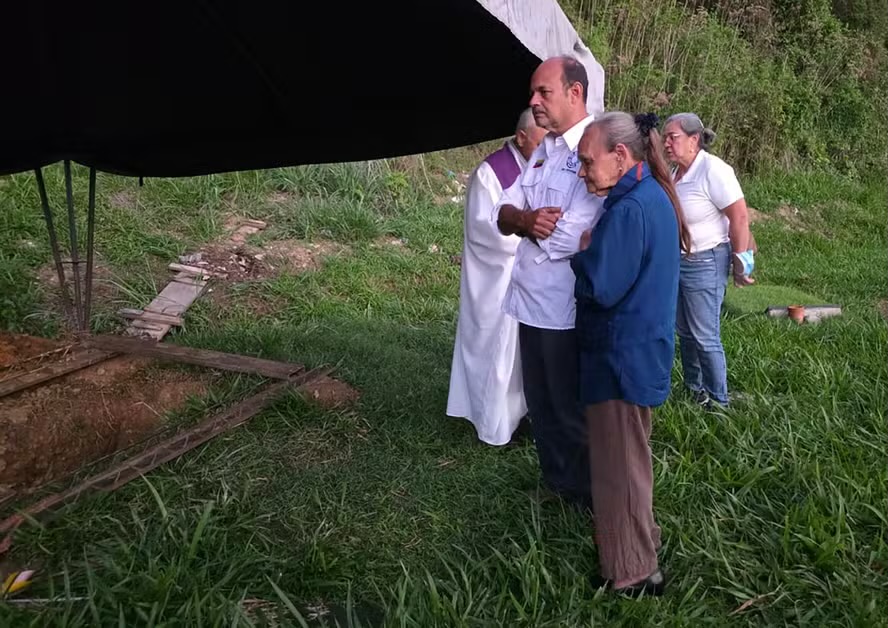
This is not only a human rights case. It is an institutional test.
The newly appointed Attorney General Larry Devoe and Ombudsman Eglé González Lobato have announced a thorough investigation. But the credibility of that investigation will depend on whether it reaches beyond immediate custodial actors and examines the full chain of responsibility: the original detention, DGCIM involvement, judicial proceedings, penitentiary custody, hospital care, communication with the family, burial procedures, forensic handling, and any institutional concealment.
The central question is whether the state will investigate itself with seriousness, transparency, and consequences.
If the investigation leads to genuine accountability across several layers of the repressive structure, full forensic clarification, public disclosure, and meaningful redress for Carmen Navas and the Quero family, the case could become a landmark opportunity to begin purging abusive actors from the system and send a signal of real commitment to transitional justice.
But if the process ends in opacity, scapegoating, procedural delay, or impunity, it will be read as a sign of institutional complicity. That outcome would deepen doubts about the government’s willingness or capacity to support any credible democratic transition.
The Quero case also exposes the broader contradiction now defining Venezuela’s political moment. While economic normalization, commercial reengagement, and investor interest are advancing, the human rights architecture remains fragile and, in many cases, unreformed.
A transition cannot be credible if it separates economic stabilization from justice and democratization. Sequencing should not exclude overlapping when necessary to strengthen the process. The Víctor Hugo Quero case is therefore not an isolated tragedy. It is a test of the entire framework now emerging around Venezuela.