

By IQ Latino | DC Desk
November 27, 2026 | Washington, D.C.
Gina Hinojosa’s stunning victory in the November 3 midterm elections represents one of the most consequential political shifts in recent Texas history. Defeating three-term Republican Governor Greg Abbott by approximately seven percentage points, despite being outspent by more than four to one in campaign advertising, Hinojosa ended more than three decades of Republican control of the governor’s office. She will become the first Latina governor in Texas history and the first Democrat to hold the office since Ann Richards left in 1995. Her victory, alongside Democrat James Talarico’s election to the U.S. Senate and significant Democratic gains in Latino-majority counties, carries national implications for the evolving electoral landscape and the role of Latino voters in American politics.
Against this electoral backdrop, the governor-elect is preparing an ambitious economic and social reform agenda.
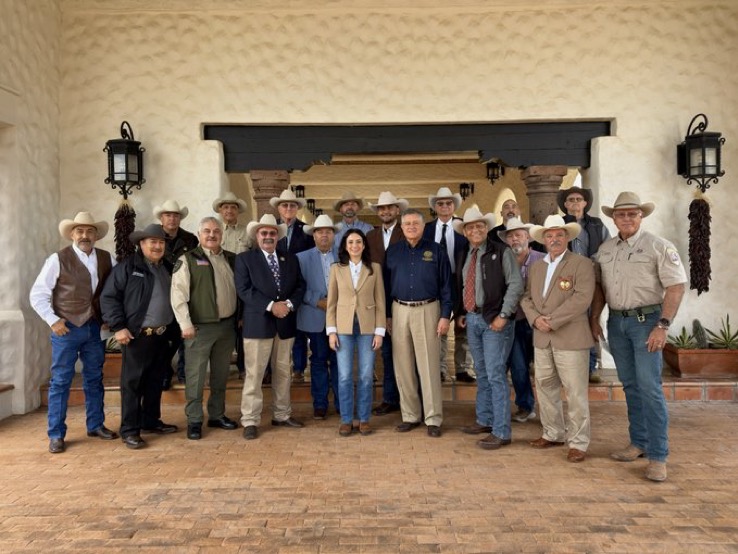
Hinojosa, a labor attorney and former state legislator, has emphasized that her administration will concentrate on economic affordability, public education, health care and public safety, moving away from the cultural conflicts that have dominated much of Texas politics in recent years.
Her administration, which takes office on January 19, 2027, will also seek to redefine the relationship between Texas and the federal government on immigration, combining a firm commitment to border security with opposition to the aggressive interior immigration enforcement operations carried out under the Trump administration.
An economic agenda focused on working families
Throughout her campaign, Hinojosa argued that the prosperity of Texas, one of the world’s largest economies, has not adequately translated into economic security for working families. She has criticized the allocation of public resources and corporate incentives at a time when many Texans face rising living costs and deteriorating public services.
Among her principal campaign proposals are:
• Direct financial relief: A one-time payment of $1,500 to Texas households, drawing on the state’s Economic Stabilization Fund, commonly known as the Rainy Day Fund.
• Lower fuel prices: Temporarily suspending state gasoline and diesel taxes to reduce transportation costs.
• Electricity affordability: Declaring a cost-of-living emergency, pursuing a freeze on residential electricity rates and ensuring that large industrial consumers bear the infrastructure costs associated with their operations.
• Consumer protection: Addressing pricing practices that use consumer data and algorithms to increase grocery prices.
• Data center regulation: Establishing a moratorium on new data center developments pending stronger safeguards for water resources, electricity consumers and local communities, while reconsidering corporate tax incentives.
• Public education: Increasing public school funding and teacher salaries, overhauling the private school voucher program, expanding access to early childhood education and reforming standardized testing.
• Health care: Expanding Medicaid, improving access to affordable health coverage and addressing unjustified insurance coverage denials.
Hinojosa has also pledged to review government contracts and spending programs to identify savings that could be redirected toward property tax relief, education and other public services.
Her agenda includes strengthening government ethics and transparency, reducing the influence of special interests over public policy and restoring greater decision-making authority to local governments.
Several of these initiatives will require legislative approval, presenting an early test of her administration’s ability to negotiate with the Republican-controlled Texas Senate.
Secure borders without aggressive interior immigration enforcement
On immigration, Hinojosa has articulated a clear distinction between securing the international border and facilitating the controversial ICE operations Texas has experienced under the Trump administration.
In a November 18 interview with The Texas Tribune, the governor-elect revealed that she had spoken directly with President Donald Trump about border security and expressed her willingness to work with his administration on that objective.
She favors an approach adapted to the geographical and operational needs of individual border communities, emphasizing technology, electronic monitoring and cooperation with local law enforcement rather than relying exclusively on physical barriers.
At the same time, Hinojosa has pledged to use the powers of her office to prevent state authorities from facilitating the kinds of ICE operations she considers detrimental to public safety.
“What ICE is doing is making us less safe. We should not facilitate that,” Hinojosa told The Texas Tribune.
She indicated that her administration would review Governor Greg Abbott’s executive orders requiring state agencies to assist federal immigration enforcement and confirmed that she would revoke the directive requiring state authorities to identify public land for migrant detention facilities.
Hinojosa also advocated greater law enforcement accountability, including identifiable officers, body cameras and dashboard cameras, alongside respect for established legal protections.
While a governor cannot unilaterally prohibit lawful federal immigration enforcement, Hinojosa can exercise authority over state resources, executive directives and certain forms of state agency cooperation, subject to applicable federal and state law.
She has also announced her intention to reverse Abbott’s freeze on the hiring of H-1B visa holders by state agencies and public universities, noting that many Texas school districts rely on foreign professionals to address teacher shortages.
A new political chapter for Texas
Hinojosa’s incoming administration will constitute a significant test of how Democratic leadership can govern a state with a traditionally Republican political identity, a large Latino population, extensive economic ties with Mexico and a central role in American energy production.
Her governing agenda combines economic affordability, public investment, consumer protection, institutional accountability and border security, while challenging aspects of the federal government’s interior immigration enforcement strategy.
The relationship between Austin and Washington will be particularly important. Hinojosa has signaled her willingness to cooperate with President Trump where their objectives coincide, while asserting her intention to exercise the powers of the governorship where their policies diverge.
The coming legislative session will determine how much of her campaign platform can be translated into concrete public policy.