

The new military agreement between Venezuela and the United States raises questions about regional security, U.S. strategic interests, and the future of Venezuela’s Armed Forces. Its true significance, however, will depend on its contribution to the democratic transition.
U.S. Defense Secretary Pete Hegseth’s visit to Caracas on November 18 represents one of the most revealing episodes in the paradoxes defining the new relationship between Venezuela and the United States. Barely ten months after the U.S. military intervention of January 3, which culminated in the capture of Nicolás Maduro and Cilia Flores, the same official responsible for the military apparatus that carried out that operation was received at Miraflores Palace by Delcy Rodríguez, who was then Maduro’s vice president and now heads the interim government.
The image captures an extraordinary transformation. Two governments that maintained openly confrontational relations for decades are now announcing a military cooperation agreement encompassing joint training, intelligence sharing, stronger operational capabilities, and collaboration against common threats, particularly drug trafficking and organized crime—the very activities underlying some of the charges brought in U.S. courts against Maduro, Flores, and other leaders of the ruling political movement.
This is more than the restoration of a relationship that had been interrupted. It is a reconfiguration of the security architecture between the two countries, with potentially profound consequences for Venezuela, its Armed Forces, and the hemisphere’s strategic balance.
For much of the twentieth century, Venezuela and the United States maintained close military cooperation, including officer training, equipment purchases, technology exchanges, and security coordination. That relationship gradually deteriorated under Hugo Chávez, culminating in the breakdown of military and counternarcotics cooperation in 2005. Venezuela subsequently deepened its military ties with Russia, China, and Iran, transforming its weapons systems, strategic alliances, and much of its defense doctrine.
The agreement announced and signed by Hegseth opens the possibility of reversing that process. But it also raises questions that extend well beyond the restoration of diplomatic relations or the debate over sovereignty and U.S. tutelage.
New Security Questions
The first question concerns the actual scope of military cooperation.
Is this a conventional agreement on training, intelligence sharing, and technical assistance, or the beginning of a strategic partnership that could include a more permanent U.S. military presence on Venezuelan territory?
Could it eventually involve military bases, joint facilities, intelligence centers, or logistical facilities for regional operations?
There is also a question of constitutional law and democratic legitimacy that cannot be overlooked. Article 13 of Venezuela’s Constitution expressly prohibits the establishment of foreign military bases, while Article 187, paragraph 11, empowers the National Assembly to authorize the presence of foreign military missions in the country. Establishing military bases, therefore, could not be settled through parliamentary authorization alone, while other forms of cooperation and military presence would require an examination of their scope and the corresponding legislative oversight. Even within that legal framework, however, a fundamental political question arises: would the current National Assembly, with its overwhelming pro-government majority, be responsible for rapidly approving the instruments needed to deepen this cooperation? Would a decision of such significance be incorporated into the political dialogue with the delegation of the National Assembly elected in 2015? I believe this issue should be reserved for an open, pluralistic, democratic debate within a new legislature elected during the transition, without precluding preliminary and preparatory steps that may be taken within the law. The answer matters: strategic commitments that could shape defense policy and national sovereignty for decades require constitutional legality, democratic legitimacy, transparency, and the broadest possible political consensus. That requirement is especially relevant for agreements intended to outlast the interim government and the U.S. administrations that promote them.
Another question arises from the growing connection between U.S. energy interests and security policy. The U.S. government’s partnership with North American Blue Energy Partners (NABEP), through an agreement granting it a 35 percent stake in the parent company and rights to a portion of its oil production, introduces a particularly novel dimension.
Could this relationship lead to the hiring of private security companies linked to the U.S. Department of Defense to protect oil facilities, particularly fields operated by NABEP? Would special arrangements be established to protect energy infrastructure considered strategic by both countries?
These are relevant questions, not established facts. The full terms of the military agreement have not yet been publicly disclosed, so it would be premature to assert that it provides for military bases, permanent deployments, or private contractors to protect oil fields.
An opportunity for regional cooperation is also emerging. Venezuela and Colombia share a long border where criminal organizations, irregular armed groups, and drug trafficking networks operate. Effective coordination among Caracas, Bogotá, and Washington could significantly improve their ability to confront these threats, provided there are clear mechanisms for cooperation, respect for sovereignty, and institutional oversight.
Hegseth’s visit to Colombia as part of his regional tour places the Venezuelan agreement within a broader hemispheric security agenda.
The Strategic Debate in Washington
The agreement also invites a reassessment of U.S. national security priorities.
The new importance attached to Venezuela reflects a strategic outlook that seeks to strengthen the U.S. presence in the Western Hemisphere, secure energy supplies, and reduce the influence of powers from outside the region.
But that approach raises a legitimate debate about the tools needed to achieve those objectives.
Does the United States need military bases in Venezuela? Or would it be more effective to strengthen its ability to project power from existing facilities in Florida or Puerto Rico through access agreements, operational cooperation, and temporary deployments?
This discussion has budgetary and strategic implications. Military resources are limited and must address priorities ranging from competition with China to security challenges in Europe, the Middle East, and the Indo-Pacific.
The need to protect energy routes, combat criminal organizations, and ensure stability in the Caribbean does not necessarily call for the same response in terms of a permanent military presence.
An especially relevant question in Washington adds to this debate: how extensive will oversight by a Democratic-controlled Congress be over military cooperation agreements with Venezuela and, particularly, the Department of War’s participation in NABEP? Both countries would benefit most from constructive oversight that brings transparency to the terms of all these agreements. Whatever needs correction should be reviewed, while everything that contributes to development and hemispheric energy security should be consolidated. On this issue, we need a bipartisan consensus in the United States, within the framework of a national agreement in Venezuela.
The Central Question: Stability or Transition?
The most consequential question, however, is neither military nor energy-related. It is political.
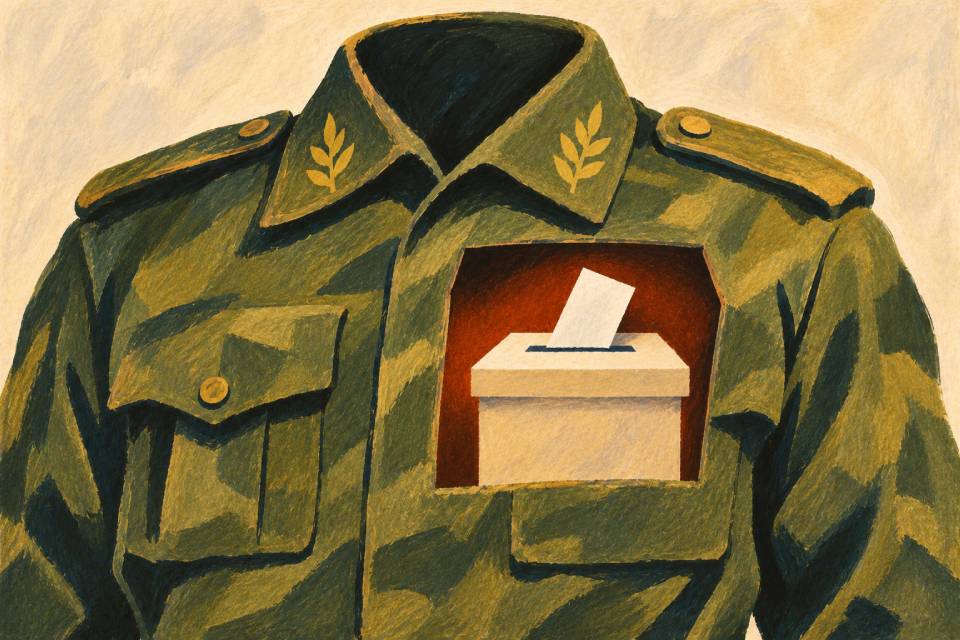
What does this agreement mean for Venezuela’s democratic transition?
Military cooperation with the United States can help stabilize the country, improve security capabilities, and facilitate economic recovery. But it can also strengthen the interim government’s position without necessarily producing equivalent progress toward democratic legitimacy.
This distinction is fundamental.
Institutional stability can facilitate a democratic transition, but it cannot substitute for one. Nor can international cooperation, however important, replace the sovereign expression of the people’s will.
The practical recognition of the interim authorities, energy cooperation, and now a military partnership may create incentives to perpetuate the current political arrangement. That possibility deserves careful consideration, especially while Venezuela lacks a defined presidential election timetable and sufficient institutional guarantees for fully democratic competition.
This is not a matter of dismissing the potential benefits of closer relations. On the contrary, it requires understanding that their true political value will depend on their connection to a verifiable roadmap toward democracy.
Can this new relationship help accelerate the transition? Or will it ultimately provide the interim government with a degree of stability that reduces its incentives to complete it?
The answer will depend on the political and institutional decisions that accompany the agreement. The logical course is to make cooperation and transition mutually reinforcing within a long-term vision that provides stability for the transition.
The Opportunity to Transform the Armed Forces
Another dimension deserves particular attention: the possibility of using this cooperation as a platform for a thorough reform of Venezuela’s military institution.
For decades, Venezuela’s Armed Forces underwent politicization, an expansion of their economic roles, and increasing identification with the ruling political project. The institution and its members face serious questions concerning the country’s autocratic and militaristic trajectory over recent decades. There is a profound crisis of trust between the military and the public. Its involvement in business, public administration, and territorial control ultimately blurred the boundaries between military responsibilities and the functions of civilian government.
Restoring a professional military requires far more than training, new equipment, or technological modernization.
Cooperation with the United States could contribute to that goal through professional education, stronger technical capabilities, reviews of operational structures, transparency mechanisms, and updated defense systems.
But the central objective should be to build Armed Forces subordinate to civilian authority, subject to constitutional oversight, and committed to defending the nation rather than keeping a political faction in power.
That transformation also requires reviewing the relationship between the military and the economy, strengthening accountability mechanisms, and restoring parliamentary oversight of defense policy.
Professionalization cannot be reduced to replacing Russian or Chinese arms suppliers with American ones. It must entail an institutional transformation that enables Venezuela’s military to fully reclaim its constitutional mission.
And that requires an essential political condition: the civilian authority to which it is subordinate must have democratic legitimacy.
A Relationship That Could Outlast Trump
The history of international relations shows that certain strategic agreements generate institutional and economic dynamics capable of surviving the governments that initiated them.
Military cooperation creates training programs, supply chains, coordination mechanisms, professional ties, and budgetary commitments that can extend over decades.
Energy partnerships, in turn, can generate long-term investments and economic interests that encourage continuity in bilateral relations.
It would therefore be a mistake to assume that the current rapprochement is necessarily temporary simply because it is associated with the Trump administration.
Its permanence, however, cannot be taken for granted either.
Its sustainability will depend on the agreements’ legitimacy, their mutual benefits, the transparency of their mechanisms, and both countries’ ability to institutionalize a relationship that transcends the exceptional circumstances of its origin.
It will also depend on how Venezuela’s political process evolves. Military cooperation that accompanies the restoration of democracy could find institutional foundations different from those sustaining a relationship based primarily on the interim government’s stability or on shielding economic decisions that would not withstand serious oversight.
Sovereignty Still to Be Fully Realized
Hegseth’s visit and the new military agreement represent a political reality that must be examined pragmatically, with attention to both its risks and its opportunities.
Venezuela needs to rebuild its defense capabilities, restore territorial security, confront organized crime, and reestablish cooperative relations with the United States and other international partners.
It also needs to overcome strategic isolation and the institutional distortions accumulated over recent decades.
But none of these tasks can be separated from the fundamental goal of restoring democracy.
Sovereignty encompasses more than territorial control or the ability to sign international agreements. Its most important political expression lies in citizens’ right to freely choose those who exercise power in their name.
That principle must guide the future of military relations between Venezuela and the United States.
The challenge is to turn this new cooperation into an instrument that helps modernize the Armed Forces, strengthen institutions, and create the conditions for an effective democratic transition.
Ultimately, the objective should be more than ensuring that Venezuela has Armed Forces that are better trained, better equipped, and better coordinated with international partners.
The objective is for those Armed Forces finally to have a president and commander in chief freely elected by Venezuelans, conscious of the historic responsibility to rebuild the nation, and fully committed to the Constitution, democracy, and the subordination of military power to civilian authority.
That would be the true measure of success for this new phase of cooperation.