

IQ Latino Washington DC Desk – After years on the margins, Venezuela is finding its way back into the institutional core of the global economy. The renewed engagement with the International Monetary Fund, the World Bank and the Inter-American Development Bank marks a quiet but consequential shift: the country is no longer treated as an outlier, but as a problem to be managed.
At the same time, a more tentative conversation is taking shape in the region. Could Venezuela return to MERCOSUR, the bloc it was suspended from nearly a decade ago? If the multilaterals represent a reopening of financial channels, MERCOSUR would signal something broader—a re-entry into the fabric of regional trade and politics.
Taken together, these moves suggest the emergence of a new phase: less about rupture or transition, and more about normalization—partial, pragmatic, and carefully sequenced.
Finance multilaterals: rebuilding the macro “grammar”
The first step is technocratic. Venezuela’s relationship with the International Monetary Fund is not, at least for now, about money. It is about restoring a basic grammar to the economy.

For years, policymakers and investors alike have operated in the dark, navigating a system defined by fragmented data, institutional erosion and a de facto dollarization that outpaced policy. Re-engagement with the Fund begins to reverse that: rebuilding statistics, reconstructing the balance of payments, and enabling the first coherent macroeconomic baseline in years.
But the financing debate is already political.
Delcy Rodríguez has framed Venezuela’s claim to roughly $5bn in IMF Special Drawing Rights not as a gateway to conditional lending, but as a recovery of sovereign resources to be deployed in critical infrastructure—particularly electricity and water systems. The emphasis is strategic. Venezuela’s power grid remains one of the most binding constraints on recovery: chronic outages, generation shortfalls and transmission failures continue to cap industrial output and erode productivity.
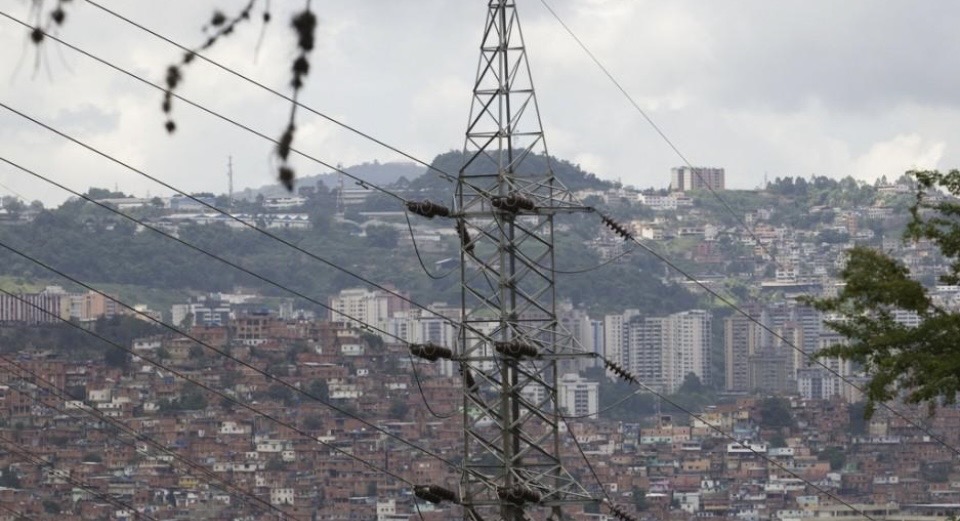
Positioning SDRs as a tool for grid stabilization reframes engagement with the International Monetary Fund as development-led stabilization, rather than austerity-driven adjustment. Whether that framing is accepted will depend on governance safeguards, transparency, and the Fund’s insistence on macroeconomic discipline. But it underscores a key point: Venezuela is not only re-entering the system—it is seeking to shape the terms of that re-entry.
The World Bank and the Inter-American Development Bank will likely move more quickly on execution. Their comparative advantage—project finance, infrastructure, and institutional rebuilding—aligns more naturally with an electricity-first recovery strategy.
MERCOSUR: the commercial hinge
If the multilaterals provide macroeconomic coherence, MERCOSUR offers a pathway back into the real economy.
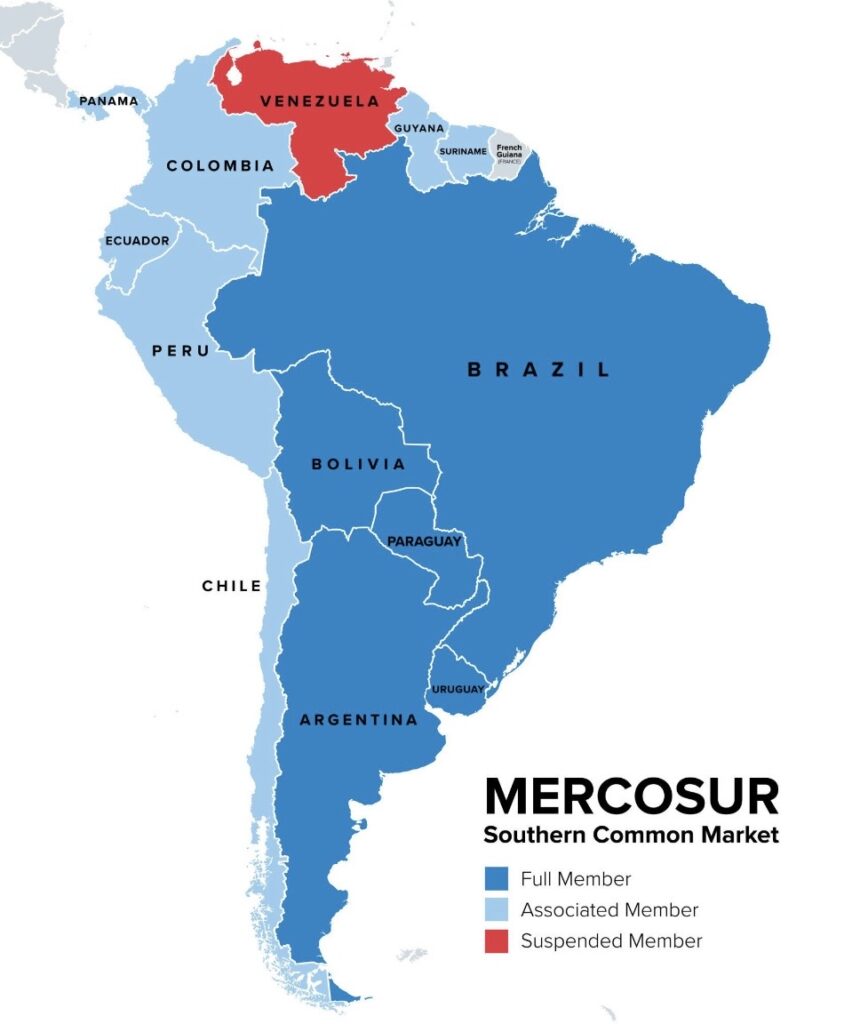
Suspended since 2016, Venezuela’s re-entry would require political accommodation from Brazil, Argentina, Uruguay and Paraguay, alongside gradual compliance with the bloc’s regulatory framework.
The implications are structural. Membership would reopen preferential trade flows, reconnect supply chains and reintroduce regulatory discipline in areas such as tariffs, arbitration and standards. In that sense, MERCOSUR functions as a soft external anchor, complementing the harder macro discipline of the IMF.
The sequencing is critical. Without macro stabilization, trade integration falters. Without trade, stabilization lacks growth. The interaction between the two will determine whether normalization translates into sustained recovery.
Gold: a balance-sheet asset—and a governance test
Hovering over this re-engagement is a more prosaic but symbolically powerful issue: gold.
At the Bank of England sit Venezuelan gold reserves—often estimated in political and market discussions at up to around $5bn at current prices. Whether the Banco Central de Venezuela regains control over those assets will matter beyond the balance sheet.
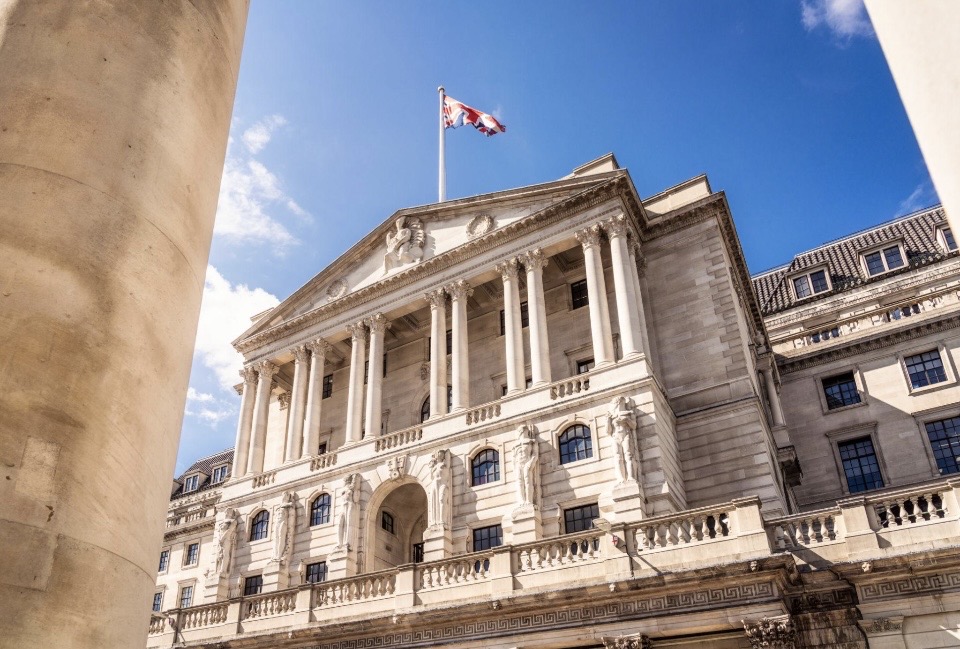
In practical terms, access would strengthen reserves, support exchange-rate management and potentially serve as a bridge in dealings with multilaterals. It could also improve Venezuela’s position in eventual debt restructuring negotiations.
But the deeper issue is governance. The use of those reserves—transparent or opaque, rules-based or discretionary—will offer an early signal of institutional intent in this new phase. Few assets better capture the central tension between stabilization and political control.
Conclusion: normalization, and what may follow
For the government led by Delcy Rodríguez, this moment offers both opportunity and constraint. A degree of macro stability—lower volatility, improved access to goods and services, gradual restoration of basic infrastructure—can ease pressure and extend the horizon of governability. It does not resolve underlying political questions, but it can postpone their urgency.
That dynamic is mirrored internationally. For Washington and regional actors alike, the emerging approach is less about forcing a decisive democratic outcome and more about preventing further economic and social deterioration. Engagement, in this context, functions as a form of risk management—aimed at stabilizing a fragile system rather than transforming it outright.
Markets are already adjusting accordingly. Venezuela is no longer seen as entirely off-limits, but neither is it open. It occupies an intermediate space—one of conditional optionality—where assets are gradually repriced against the possibility of a more structured, if still uncertain, trajectory.
If this managed economic transition holds, however, its implications may extend beyond stabilization. Incremental improvements—more reliable services, modest growth, a degree of institutional predictability—can gradually lower the political cost of reform. Over time, that process may create space for a controlled political opening, one that evolves step by step rather than through abrupt change, and that ultimately culminates in a credible electoral process and a more sustainable governing arrangement.
For the United States, this points to a strategic priority: shaping a bipartisan approach that aligns economic engagement with a clear pathway toward democratic normalization. Bridging those two tracks—stability and political evolution—may prove more effective than alternating between pressure and disengagement.
Not yet a fully integrated political transition to democracy, but a managed economic transition based on a recalibration between a country that needs the system, and a system that, increasingly, is willing to let it back in—and that, if sustained, could ultimately lay the groundwork for a durable political settlement.