

The debate over the official dollarization of Venezuela’s economy has returned to the center of economic and political discussion. This is no coincidence. After years of hyperinflation, institutional collapse, and the near-total loss of confidence in the bolívar, a growing number of economists advocate for the formal adoption of the U.S. dollar as a tool to stabilize the economy, anchor expectations, and correct distortions accumulated over decades of economic mismanagement.
The logic is straightforward. By eliminating the local currency, the state also loses the ability to finance itself through inflationary money creation. In theory, dollarization imposes fiscal discipline, reduces exchange rate risk, lowers interest rates, and facilitates reintegration into global financial markets. Cases such as Ecuador and El Salvador are often cited as evidence of its effectiveness in curbing inflation. Panamá, meanwhile, illustrates that an economy can operate without a sovereign currency.
It is also important to acknowledge that Venezuela already operates to a significant extent under a de facto dollarized system. The U.S. dollar has become the dominant reference for pricing, savings, and a meaningful share of transactions. In this process, remittances from the diaspora have played a critical role: particularly during the years of steep decline in oil revenues under the sanctions regime, they provided hard-currency liquidity, supported household consumption, and contributed—at the margin—to stabilization. This matters because it reframes the debate: it is not between a fully bolívar-based economy and a dollarized one, but between an informal dollarization—with its benefits and distortions—and its potential formalization, with far deeper implications.
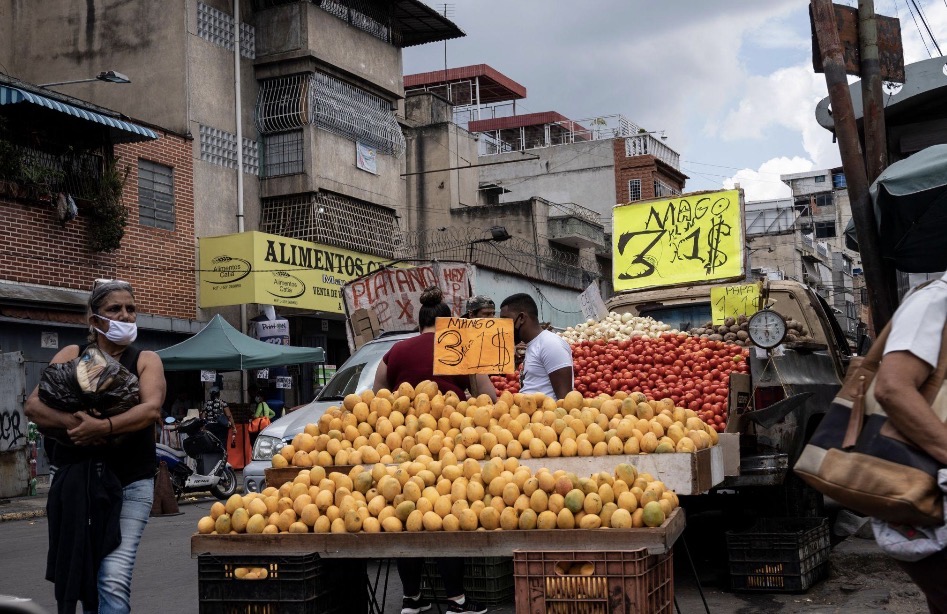
However, this process coexists with a critical distortion: there is a wide gap between the incomes of the majority—now increasingly referenced in dollars, yet still very low in real terms—and the cost of goods and services that are already priced in dollars or at international levels. This asymmetry not only constrains purchasing power, but also deepens inequality and limits the recovery of domestic demand. In that sense, de facto dollarization has contributed to a degree of price stability, but without a corresponding improvement in incomes, resulting in an economy where the monetary reference is hard, but purchasing power remains fragile.
But the overall balance is more complex. While dollarization has proven effective as a nominal anchor, its record in terms of growth, economic diversification, and resilience is far more mixed. In Ecuador, for instance, inflation was contained, yet the economy remained heavily dependent on oil and showed limited export diversification. Monetary stability did not resolve underlying structural imbalances. This nuance is particularly relevant for Venezuela.
My skepticism toward dollarization does not stem from a denial of its short-term benefits, but from a deeper concern about its impact on the country’s productive structure and economic sovereignty. In a resource-dependent economy like Venezuela’s, dollarization can rigidify—and potentially entrench—the effects of what economists refer to as Dutch Disease: a phenomenon that, in this case, arises when foreign currency inflows from oil exports appreciate the real exchange rate, increase the cost of domestic production, and weaken non-oil sectors. Under dollarization, this adjustment ceases to be flexible: devaluation is no longer possible, and the burden shifts to wages, employment, and domestic economic activity.
The likely outcome is an economy even more dependent on oil, with reduced capacity for diversification and greater difficulty in developing competitive non-oil tradable sectors. This is compounded by a central issue: the loss of monetary sovereignty. Dollarization entails relinquishing key economic policy tools—liquidity management, the ability to respond to external shocks, and the role of lender of last resort—at a time when institutional capacity remains fragile. This is not a marginal cost; it is a structural constraint.
It is one thing to relinquish a national currency in order to build a shared monetary system within a framework of deep economic integration—as in the European Union—and quite another to do so unilaterally, effectively outsourcing monetary sovereignty and placing the country in a position of dependence on the policy decisions of another state.
The distributive effects are also uneven. Sectors tied to imports, commerce, and services tend to benefit from price stabilization and convergence toward international levels. But in a low-productivity economy, dollarization can also lock in depressed real wages and deepen social precariousness. Venezuela already partially exhibits this reality: increasingly dollarized prices coexist with lagging incomes.
The deeper issue is that the debate over dollarization risks confusing a tool with a solution. Venezuela’s inflation is not an isolated or purely monetary phenomenon; it is the cumulative result of fiscal imbalances, economic distortions, and weakened institutions. For years, the monetary financing of public spending, the destruction of the productive base, the erosion of central bank independence, and the absence of credible rules have systematically undermined confidence in the currency. In that context, inflation is less a cause than a consequence. Dollarization may suppress the symptom, but it does not necessarily address the structural drivers behind it.
What Venezuela needs is not simply a change of currency, but a change of model: as much market as possible, and as much state as necessary. A model that restores confidence, promotes investment, reestablishes clear rules, and fosters productivity. Within that framework, the role of an independent monetary authority is essential—not to finance the state, but to preserve the value of the currency, anchor expectations, and ensure macroeconomic stability. Rebuilding that institutional framework is more complex than dollarization, but ultimately more sustainable.
Dollarization may offer a rapid response in a moment of urgency. But it cannot substitute for deeper reforms. It may stabilize prices, but it does not generate productivity or diversify the economy. For Venezuela, the real challenge is not choosing between the bolívar and the dollar, but building an economy capable of sustaining either.
In that process, the question of economic sovereignty is central. Retaining domestic monetary policy tools does not guarantee stability, but relinquishing them reduces the margin of maneuver in the face of external shocks and economic cycles. In economies marked by high volatility—such as those dependent on natural resources—that flexibility can be decisive. The balance between stability and autonomy is not straightforward. But it is precisely in that balance that the sustainability of any long-term reconstruction strategy will be determined.
*Leopoldo Martínez Nucete is an international lawyer and former Venezuelan congressman. He is the founder of the Center for Democracy and Development in the Americas (CDDA) and served as Senior Counselor at the U.S. Department of Commerce during the Biden administration.