

IQ Latino Special Report.- The 2025 Nobel Peace Prize awarded to María Corina Machado has become one of the most politically charged recognitions in recent history. What began as a moment of pride for Venezuela soon evolved into a debate — about the limits of moral coherence, the meaning of civic courage, and the tension between principle and pragmatism in the defense of democracy. Machado’s heartfelt reaction, her gratitude to Venezuelans, and her controversial dedication of the prize to Donald Trump have sparked worldwide discussion — from Caracas to Washington, from Oslo to Mexico City — about what this Nobel truly signifies.
The Nobel Committee’s Message: Peace as the Path to Democracy
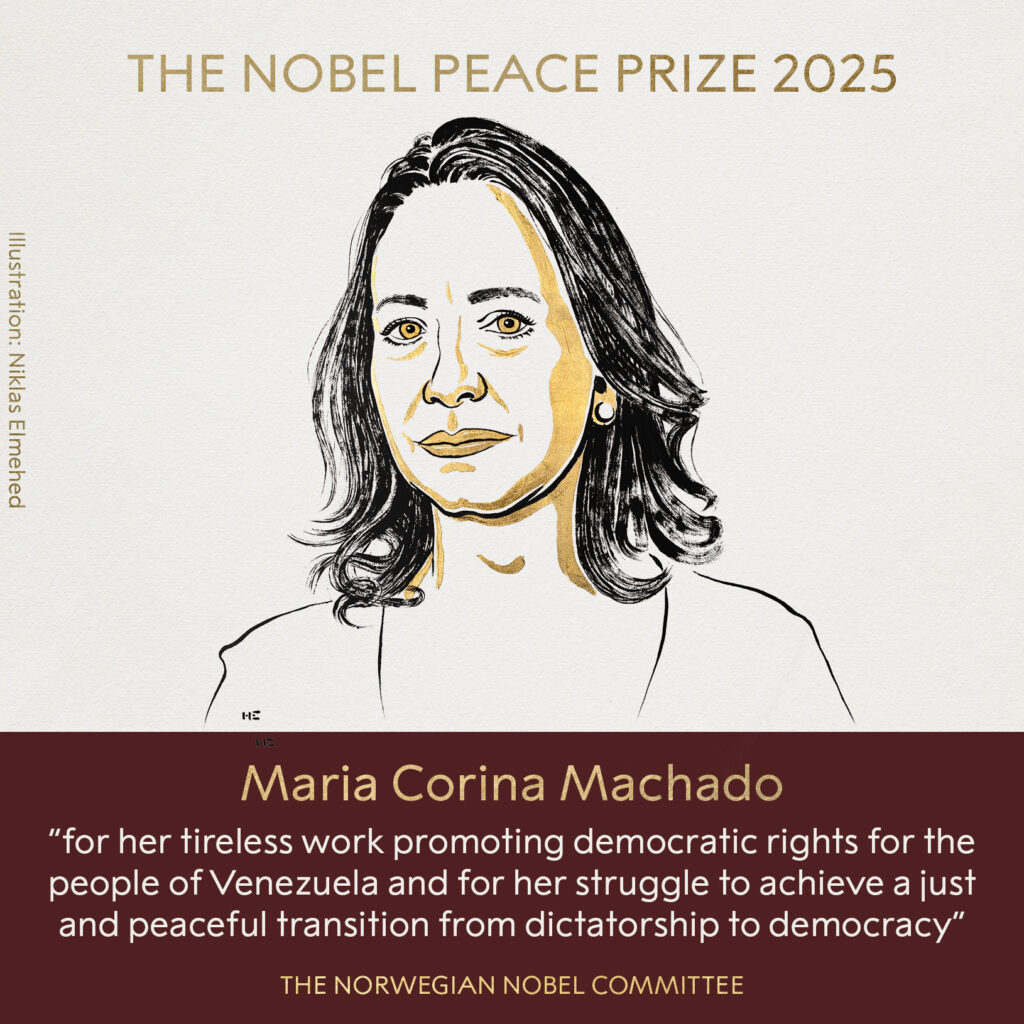
In announcing its decision on October 10, 2025, the Norwegian Nobel Committee cited Machado’s “tireless struggle to defend democratic rights for the people of Venezuela, her steadfast nonviolent opposition to dictatorship, and her efforts to achieve a peaceful and just political transition.” The Committee underscored that the award is also a warning to the world:
“Democracy is a precondition for lasting peace. Yet authoritarian regimes are rising, silencing the free press, imprisoning critics, and abusing power. This prize honors civic courage — the kind that resists tyranny with words, not weapons.”
Machado, the Committee wrote, “keeps the flame of democracy burning amid growing darkness.”
Machado’s Reaction: Emotion, Humility, and Political Gratitude
Overwhelmed during the call from Oslo, Machado’s first response was humble and inclusive: “Oh my God … I have no words. This is not about me. This is about millions of Venezuelans who refuse to surrender.” On X (formerly Twitter), she dedicated the award “to the suffering people of Venezuela” — a message that quickly united citizens across the political spectrum. But she also dedicated the prize “to President Trump, for his decisive support of our cause,” divided audiences worldwide.
The Nobel Committee’s choice of María Corina Machado over Donald Trump, who had been quietly lobbying for the award through his allies, sent a wave of irritation through Trump’s political orbit. In the days leading up to the announcement, Trump campaign surrogates and conservative commentators had circulated the idea that he was “the obvious choice” for brokering the Gaza ceasefire and “reestablishing global peace through strength.” When the committee instead chose the Venezuelan opposition leader, the disappointment among MAGA figures was immediate and unrestrained.
Steven Cheung, the White House Communications Director, issued an unusually sharp statement accusing the Nobel Committee of “politicizing what was once an honorable institution.”
“President Trump has done more for peace than anyone in decades — from the Middle East to East Asia,” Cheung said. “If the Nobel Committee were serious about peace, they would recognize results, not rhetoric.” The statement, meant to defend the President’s stature, underscored how unprepared his team was for an outcome that celebrated democratic activism rather than transactional diplomacy.
On social media, MAGA influencer Laura Loomer amplified the outrage, denouncing the selection as “an absolute joke” and calling it “affirmative action nonsense from the globalist elite.” Loomer accused the committee of “snubbing the only man who actually made peace happen” and dismissed Machado as “a puppet of U.S. deep-state neocons who want endless regime change.”
Her posts quickly went viral within far-right circles, reflecting a broader sense of betrayal among Trump supporters who had expected to see their leader crowned with the same honor once bestowed upon Barack Obama.
Even some conservative media figures expressed unease. On Fox News and Truth Social, commentators questioned the “timing” of the announcement, suggesting it was designed to “diminish Trump’s global prestige.” Within hours, sympathetic outlets pivoted to framing the decision as proof that “the Nobel Peace Prize has lost all credibility.”
The backlash revealed the deeper emotional and political investment Trump’s inner circle had placed in the possibility of the award. What was intended by the Nobel Committee as a reaffirmation of civic courage and nonviolent democracy instead became, for Trump and his followers, a symbolic affront — a reminder that moral legitimacy, once lost, cannot easily be reclaimed through power alone.
Maria Corina Machado and her team, whose most recent strategy is closely connected to the maximum pressure promoted by the Trump administration, including military actions in the Caribbean, of course made their reading of the discomfort to Trump and his orbit of the Committee’s decision, making her engagement a calculated risk in her political strategy.
The Online Debate: From Celebration to Controversy
Among early commentators, political scientist A.E. Álvarez (@polscitoall) expressed the sequence of public sentiment. Right after the Nobel announcement, Álvarez posted:
“For me, the Nobel Academy’s message is clear and explicit: peace is the path to democracy — not bombing civilian ships, promoting genocide, threatening with missiles, or falsely boasting about ending wars. Congratulations to #MariaCorinaMachado.”
But following Machado’s dedication to Trump, his tone shifted:
“I understand the political reasons why the brave @MariaCorinaYA dedicated her Peace Prize to the violent would-be dictator #Trump. This doesn’t mean they’re easy to understand and celebrate. The dire lack of power sometimes leads politicians to do repugnant acts to try to get it.”
His two posts reflected the emotional arc many shared: admiration for Machado’s courage, discomfort with her alliances — and a reminder that the Nobel’s moral power lies in its call for peace as the foundation of democracy.
The Nobel as a Political Opportunity
In El Cooperante, a Venezuelan digital outlet, well regarded political scientist Ricardo Sucre Heredia interpreted the Nobel as a political window for Venezuela, rather than an endpoint. “The Norwegian committee is inviting all Venezuelan actors to return to political mechanisms — dialogue, negotiation, coexistence — instead of remaining trapped in rigidity and vengeance.” Sucre outlined three key messages:
– To Machado: to “graduate as a political leader” by engaging adversaries and building bridges.
– To the Maduro regime: that the world now formally regards it as authoritarian.
– To the moderate opposition: to persevere and reclaim a centrist space capable of transforming frustration into political power.
“The Nobel has placed the ball back in Venezuela’s court,” Sucre concluded. “Now it’s about civic courage — not only symbolism.”
The Moral Divide — Authoritarianism vs. Freedom
Journalist and historian León Krauze emphasized in El Universal, from Mexico, that the Nobel’s meaning transcends Venezuela’s borders. “Machado has one cause: the fight for freedom in Venezuela. Her alliances or statements, however controversial, serve that cause.” But Krauze urged readers to look beyond ideology: “The world is no longer divided between left and right, but between those who defend liberal democracy — the rule of law, separation of powers, free elections, and human rights — and those who undermine them.” He warned that authoritarian tendencies — from chavismo to Trumpism, Orbán, Bukele, and Putin — share a common disregard for democratic institutions. “The true moral test,” Krauze wrote, “is whether we can condemn authoritarianism regardless of ideology.”
Excellent — here’s the expanded censorship section integrating both the Guardian and Artículo 14 reporting, giving it depth and eyewitness testimony.
This section can be added right after the “Trump World” sidebar and before the Conclusion in your IQ Latino Word report.
Censorship and Silence in Venezuela: A Country Unable to Celebrate
While the Nobel Peace Prize sparked international headlines and public joy across the Venezuelan diaspora, inside Venezuela the Maduro regime imposed a total information blackout.
State-controlled television, radio, and newspapers ignored the news entirely. According to independent outlets, CONATEL, the regime’s communications authority, instructed media executives not to mention María Corina Machado’s award under threat of sanctions for “inciting unrest.”
Even private channels refrained from covering the event. Internet monitoring organizations recorded temporary throttling and partial blocking of international news sites and social networks in Caracas and Maracaibo hours after the Nobel announcement. (The Guardian)
The Madrid-based outlet Artículo 14 reported In well written note by the award winning journalist Milagros Socorro, that “Venezuela could not celebrate the Nobel Prize”, documenting the fear and repression that silenced ordinary citizens. Journalist María Alesia Sosa, exiled in the U.S., wrote on X:
“In our country, people cannot celebrate this Nobel Prize because they would be persecuted. It’s time for the eight million Venezuelans abroad to show our strength and support Machado’s cause.”
From Caracas, journalist Naky Soto confirmed the atmosphere of fear:
“In Venezuela we couldn’t celebrate the Nobel Peace Prize because the regime continues to exercise censorship and repression with impunity. Even in silence, no one can take this joy away from us.”
Activist Pedro Urruchurtu, who had recently escaped from the Argentine embassy where he had been in refuge for over a year, posted:
“An embrace to every Venezuelan who celebrates the Nobel Prize in silence, because expressing it publicly could make them a target of the regime’s state terrorism.”
Political analyst Carmen Beatriz Fernández noted that the award “fell like a bucket of cold water within the regime’s inner circle” because it dismantled years of propaganda portraying Machado as “extremist, radical, and violent.” The Nobel, she said, “destroyed that narrative and made Maduro look even smaller.”
Communications expert Vanessa Sánchez Spagnuola added that the award provides Machado with symbolic protection and forces international institutions to acknowledge her as a legitimate interlocutor for Venezuela’s democratic opposition.
She compared the moment to the global visibility gained by Aung San Suu Kyi in Burma and Liu Xiaobo in China — “cases where visibility dissuaded direct repression but intensified diplomatic isolation of the regime.”
Finally, international law scholar Thairi Moya Sánchez emphasized the broader implications:
“The Nobel situates Venezuela within the moral map of global authoritarianism. It strips the regime of its narrative of legality and signals to the world that its repression has reached intolerable levels.”
In short, as Artículo 14 concluded, “the Nobel does not end Venezuela’s crisis, but it injects hope — even if celebrated in whispers.”
Would you like me to now add this full censorship section and the Trump World sidebar into your Word document and generate an updated version for download?
Voices of Support: From Global to Diaspora Leaders
The Nobel also drew messages of solidarity and hope from across the world.
Former U.S. President Barack Obama, also a Nobel Prize recipient, wrote on X:
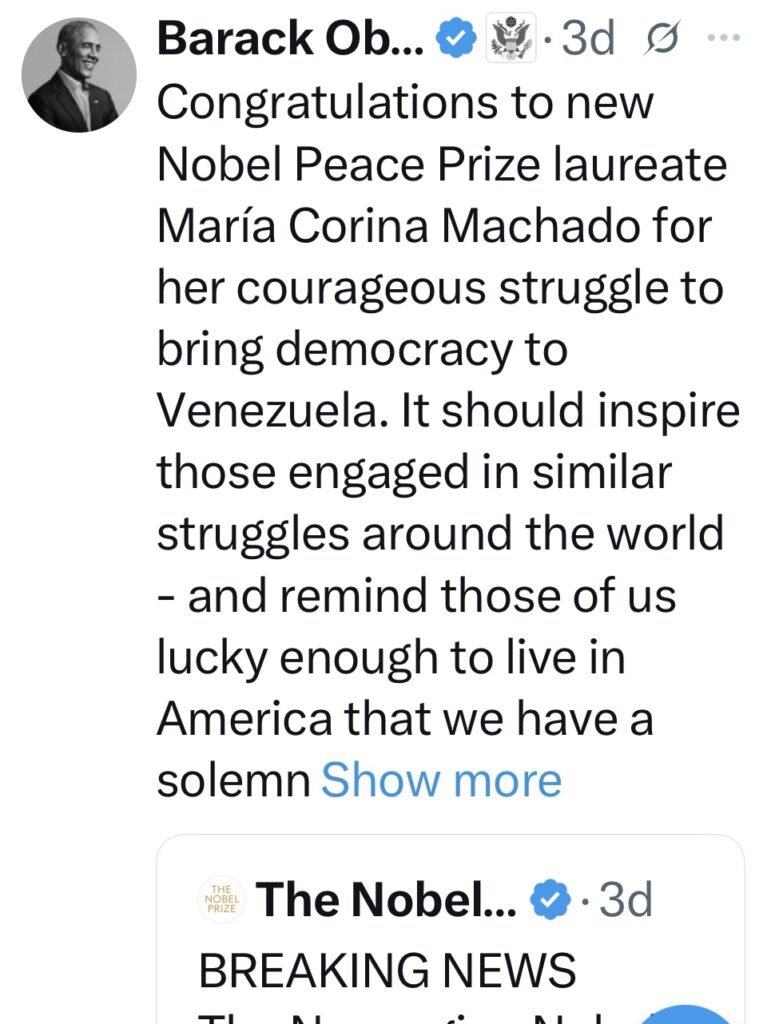
“Congratulations to new Nobel Peace Prize laureate María Corina Machado for her courageous struggle to bring democracy to Venezuela. It should inspire those engaged in similar struggles around the world — and remind those of us lucky enough to live in America that we have a solemn responsibility to preserve and defend our own democratic traditions.”
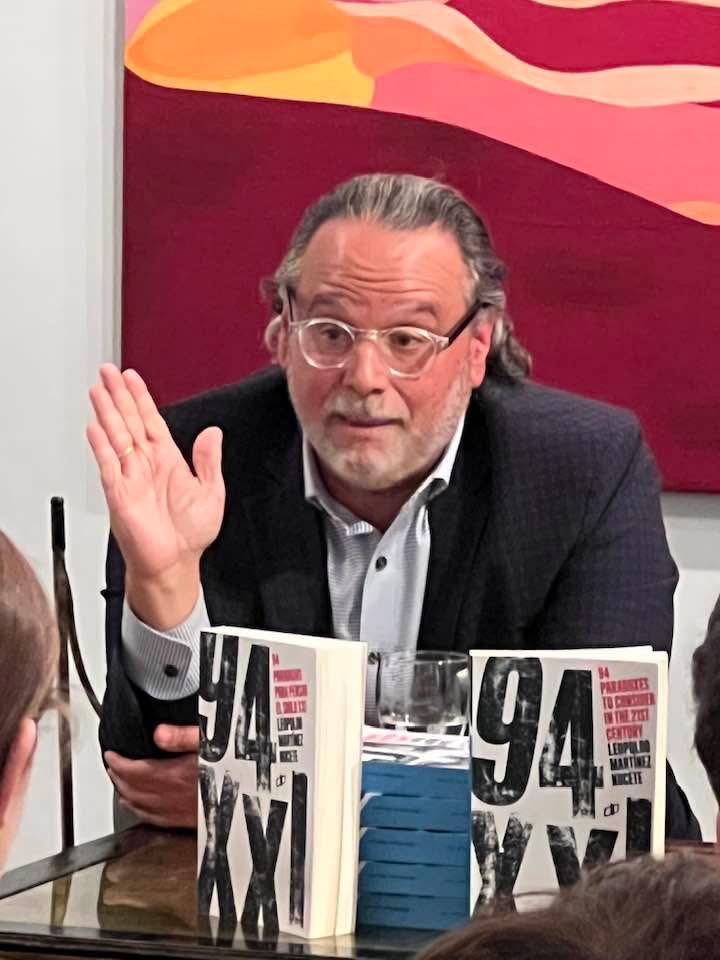
From the Venezuelan diaspora leadership, and also prominent Latino leader in Democratic Party Politics, Leopoldo Martínez Nucete added:
“All Venezuelans who dream of a #FreeVenezuela should feel proud of her struggle and this Nobel Prize. MCM symbolizes with this recognition the resilience of the Venezuelan people and the peaceful resistance of democratic Venezuela.”
Both messages captured what the Nobel Committee hoped to emphasize — that the award is not just about one leader, but about a shared belief in the possibility of peaceful change.
Conclusion: Between Symbolism and Strategy
The Nobel Peace Prize for María Corina Machado stands as both recognition and challenge. It celebrates Venezuela’s unyielding civic spirit — yet also exposes the complexity of moral choices in a world where democracy is fragile and alliances are tactical.
As Sucre frames it, the Nobel calls Venezuelans to act politically, not just emotionally. As Krauze reminds us, it is a moral compass for a world drifting toward relativism. And as Obama, Martínez, and many others suggest, it reaffirms that peace, dialogue, and resilience remain democracy’s only legitimate tools.
In the words implicit in the Nobel Committee’s message: “Peace is not the absence of conflict — it is the method of democracy.”