

Venezuela stands at a pragmatic crossroads — oil reopening doors that politics alone could not.
After seven years of severed formal ties, diplomatic channels between Washington and Caracas are visibly reopening.
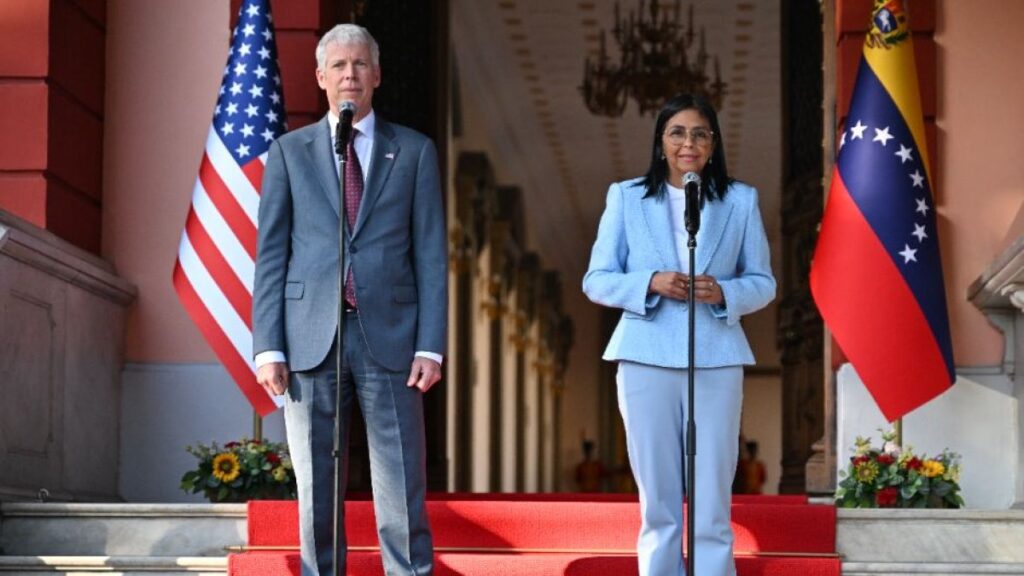
The arrival in Caracas of Laura Dogu, appointed as senior U.S. envoy, marks the highest-level American diplomatic presence in Venezuela since 2019. Her meetings at Miraflores Palace with Venezuelan authorities signal a deliberate, structured attempt to rebuild bilateral mechanisms — starting with energy coordination, trade normalization, and consular affairs.
On the Venezuelan side, Félix Plasencia has been designated to represent Caracas in Washington, a move that formalizes the reciprocal reestablishment of diplomatic representation.
This is not merely symbolic. Both governments appear to be constructing a controlled diplomatic thaw, anchored in energy pragmatism rather than ideological convergence.
The reopening of embassy functions — even if gradual — reflects a shift from maximum-pressure confrontation to calibrated engagement.
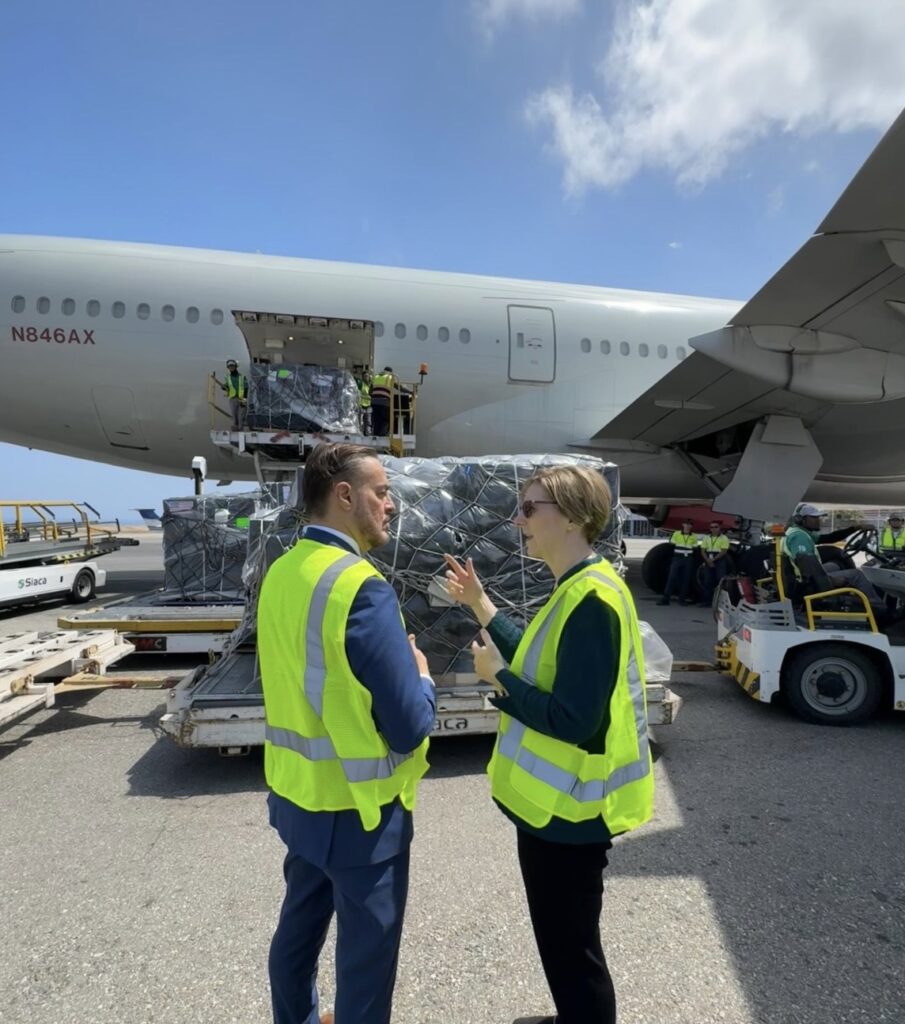
At the end of this week, the United States and Venezuela agreed on an initial delivery of more than 6 tonnes of priority medical and healthcare supplies, which were airlifted from the U.S. and received at Simón Bolívar International Airport outside Caracas. The shipment — the first under a newly cooperative phase in bilateral relations — was welcomed jointly by U.S. envoy Laura Dogu and Venezuelan diplomat Félix Plasencia as a tangible step toward addressing Venezuela’s long-standing shortages in essential medicines and stabilizing its beleaguered health system. U.S. officials characterized the delivery as part of an ongoing series of aid shipments in the coming days, underscoring a shift toward pragmatic cooperation on humanitarian needs.
Oil at the Center: The New Hydrocarbons Law and OFAC Licenses
At the heart of this reset lies oil.
Venezuela’s National Assembly approved sweeping reforms to the country’s hydrocarbons framework, modifying the historic Ley Orgánica de Hidrocarburos to expand private-sector participation and provide greater contractual flexibility for foreign operators.
The reform seeks to reverse two decades of declining production under PDVSA, whose output fell from over 3 million barrels per day in the late 1990s to roughly one-third of that level.
Simultaneously, the U.S. Treasury’s Office of Foreign Assets Control (OFAC) has issued a series of general licenses allowing expanded activity in Venezuela’s oil sector. These authorizations permit:
- Export and marketing of Venezuelan crude under specific compliance conditions
- U.S.-origin equipment and diluent exports
- Negotiation of new investment structures with Venezuelan state entities
Major energy companies — including Chevron, Repsol, Eni, and Shell — are either expanding or evaluating deeper reentry.
The message is clear: energy security and market opportunity are driving policy recalibration on both sides.
The Secretary of Energy’s Visit: A Delicate Balance
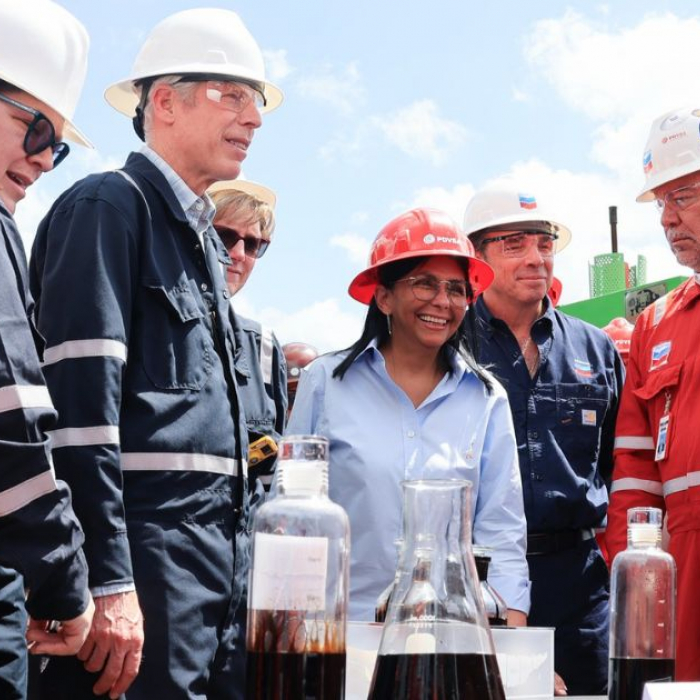
The recent visit of the U.S. Secretary of Energy to Caracas further underscores the centrality of oil diplomacy.
While no formal treaty announcements followed, the optics were unmistakable: technical dialogue, field assessments, and compliance discussions.
Washington appears to be walking a careful line — encouraging energy production and U.S. corporate participation while avoiding language that suggests full political endorsement of Venezuela’s governing authorities.
For Caracas, the visit serves as validation that its institutional adjustments — particularly in hydrocarbons governance — are being acknowledged at the highest levels.
Amnesty Law: Reconciliation or Limited Opening?
Parallel to diplomatic and energy developments, the National Assembly is advancing an Amnesty Law presented as part of a broader reconciliation effort.
Authorities argue the measure will consolidate political pacification and formalize recent prisoner releases. Attorney General Tarek William Saab has emphasized that the law excludes serious crimes such as crimes against humanity.
Critics note, however, that the scope appears narrower than previous amnesty initiatives and lacks robust institutional guarantees typically associated with transitional justice frameworks.
Whether this constitutes a genuine political opening or a tactical stabilization mechanism remains an open question.
Delcy Rodríguez on NBC — and Trump’s Calculated Praise
In a high-profile interview with NBC News, Vice President Delcy Rodríguez confirmed that she has received an invitation to visit the United States, framing it as part of expanding bilateral engagement.
Rodríguez defended the legitimacy of her government and reiterated that any cooperation with Washington would respect Venezuela’s sovereignty.
Meanwhile, President Donald Trump Once again has publicly praised Rodríguez’s management of economic stabilization efforts while de facto issuing a formal political recognition statement beyond but short of formal statements through current diplomatic channels.
The messaging from Washington is pragmatic: cooperation in energy and migration management is advancing, but political recognition remains calibrated and conditional.
The Emerging Pattern
Three dynamics now define Venezuela’s current moment:
- Energy as the Anchor – Oil production and global market integration are the primary drivers of rapprochement.
- Diplomatic Restoration Without Ideological Alignment – Formal channels are reopening, but strategic mistrust persists.
- Controlled Political Liberalization – Amnesty measures and prisoner releases signal tactical flexibility rather than systemic transformation.
The country is entering a phase where economic normalization is moving faster than political restructuring.
Whether this produces a durable transition or a stabilized hybrid arrangement will depend on:
- Institutional guarantees around electoral processes
- The sustainability of oil-sector reforms
- The degree of international oversight accompanying reconciliation efforts
For now, Venezuela stands at a pragmatic crossroads — oil reopening doors that politics alone could not.