

A recovery priced for speed, unfolding at the pace of politics
The macro turn is real—but conditional
Venezuela’s economic outlook has improved materially since early January. Oil production has risen modestly—by an estimated 50–100 thousand barrels per day—supported by selective sanctions relief, operational reactivation, and renewed engagement with foreign operators. This has translated into incremental revenue gains and a measurable easing of macroeconomic pressures.
Still, the recovery remains narrow and fragile. Inflation continues at elevated levels; fiscal capacity remains constrained; and the broader economy continues to depend overwhelmingly on hydrocarbons.
As one recent market note by Barclays put it, the central risk is that optimism may “give way to euphoria—an outcome that could ultimately give way to disappointment.”
In other words, markets are beginning to price a transition faster than the political process is likely to deliver: a recovery priced for speed, unfolding at the pace of politics. This disconnect defines the current moment. Financial markets, oil operators, and some policymakers are increasingly behaving as if Venezuela were entering a relatively rapid normalization phase—one in which sanctions unwind, production rises steadily, and a debt restructuring becomes viable in the near term. But the underlying political process tells a different story.
The timeline for transition remains uncertain. U.S. policy sequencing continues to prioritize stabilization before elections. Institutional reconstruction—particularly in the judicial and electoral domains—remains incomplete. And domestic political expectations are rising faster than the system’s capacity to respond.
Between these forces lies the central tension and the unresolved question: rupture or adaptation. A full transition or incremental changes.
Institutional rearrangement: controlled openings, limited autonomy
The reconfiguration of Venezuela’s institutional leadership continues to signal controlled adaptation rather than systemic rupture.
The appointment of Larry Devoe as interim Solicitor General illustrates this dynamic. A constitutional lawyer with prior experience within the Ombudsman’s Office (Defensoría del Pueblo)—where he served in senior legal and advisory roles—and later as Deputy Attorney General under Tarek William Saab, Devoe brings institutional familiarity and technical grounding. He assumed the role following Saab’s resignation. However, he is also widely understood to be part of the circle of trust of Delcy Rodríguez and Jorge Rodríguez, raising questions about the degree of independence he can exercise within a prosecutorial system long marked by politicization and its role in the regime’s repressive apparatus.
The government-controlled National Assembly appears decisively aligned behind Devoe’s appointment. For domestic audiences, his designation may not restore full functional legitimacy to the Public Ministry. However, it creates an expectation of improvement—conditional on performance.
At the same time, attention is turning to the pending designation of a new Ombudsman. This represents a potential opening: a credible, independent figure—without ties to the governing coalition—could provide an important signal of institutional rebalancing and help build confidence in a broader transition framework.
Two economic visions: Houston vs Miami
The contrast between two recent international interventions captures the competing economic narratives shaping Venezuela’s future.
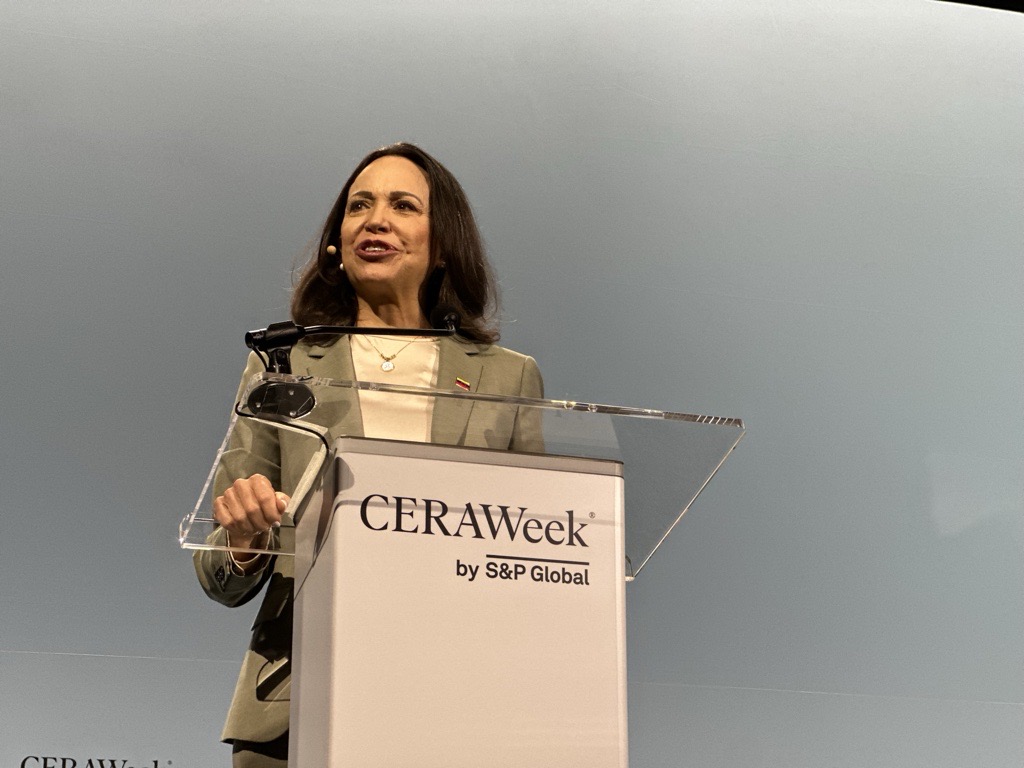
At CERAWeek in Houston, María Corina Machado presented a sweeping reform agenda centered on market liberalization, institutional rebuilding, and a redefinition of the state’s role in the economy. Notably, she raised the possibility of privatizing PDVSA, arguing that only a structural transformation of the oil sector can unlock investment at scale. Her proposal immediately triggered backlash from within Venezuela. Workers and unions linked to the state oil company publicly rejected privatization, underscoring the political and social sensitivity of any reform affecting PDVSA.
Days later, Delcy Rodríguez addressed the FII PRIORITY Summit in Miami—a high-level forum backed by Saudi Arabia’s Public Investment Fund, convening global investors, sovereign funds, and corporate leaders. Her message was markedly different: Venezuela as an open but state-led investment destination, anchored in regulatory adjustments—particularly the new hydrocarbons framework—and selective partnerships with international firms.
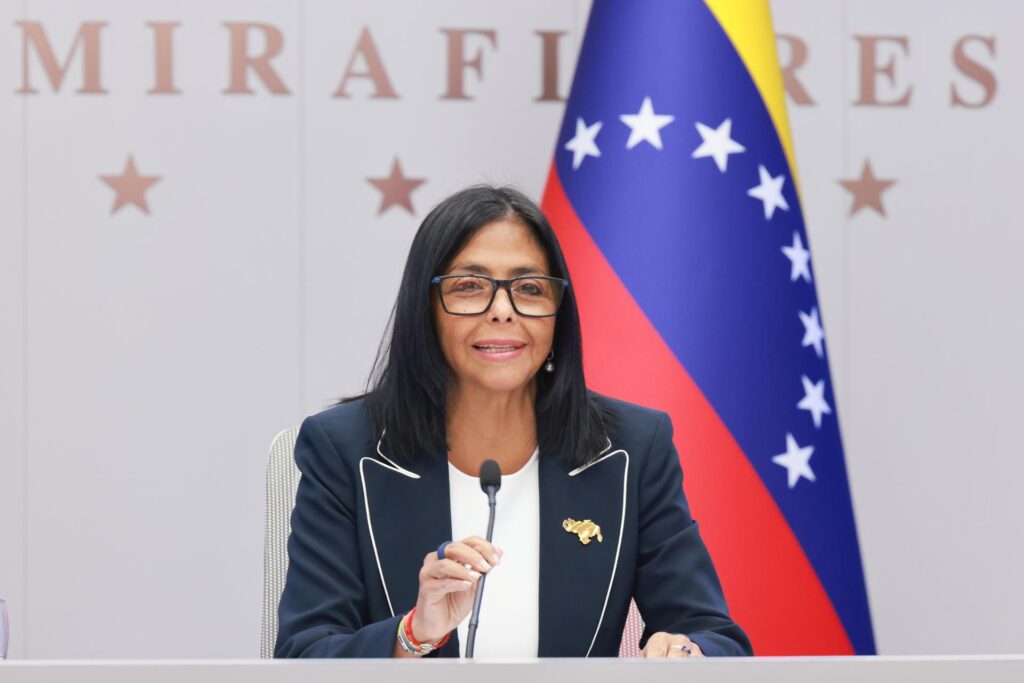
The contrast is stark:
Machado: structural overhaul, privatization, institutional reset. Rodríguez: continuity with adaptation, state centrality with calibrated opening.
Both seek investment. They differ fundamentally on the architecture of the system that would receive it.
Diplomatic re-engagement: cautious normalization
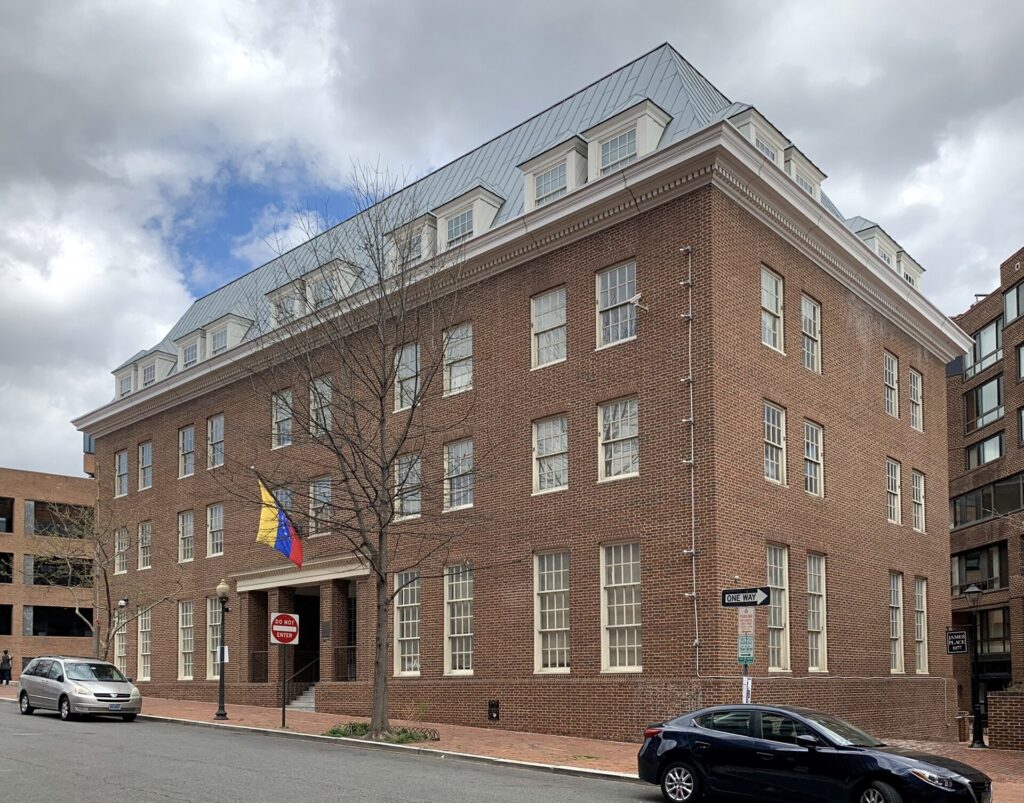
Diplomatic channels between Caracas and Washington continue to reopen incrementally. Early in the week OFAC licenses to resume control of the real property of Venezuela dedicated to the diplomatic missions was issued in Washington. Caracas responded immediately and sent a delegation with appointed official to lead the diplomatic presence ot the interim government in U.S. soil.
The designation of Felix Plasencia to lead Venezuela’s renewed diplomatic presence in Washington signals a calibrated effort to restore formal engagement. Plasencia, a career diplomat who has served as ambassador to China and the United Kingdom and as foreign minister, is also considered part of the Rodríguez inner circle—suggesting that political trust remains a key variable in diplomatic positioning.
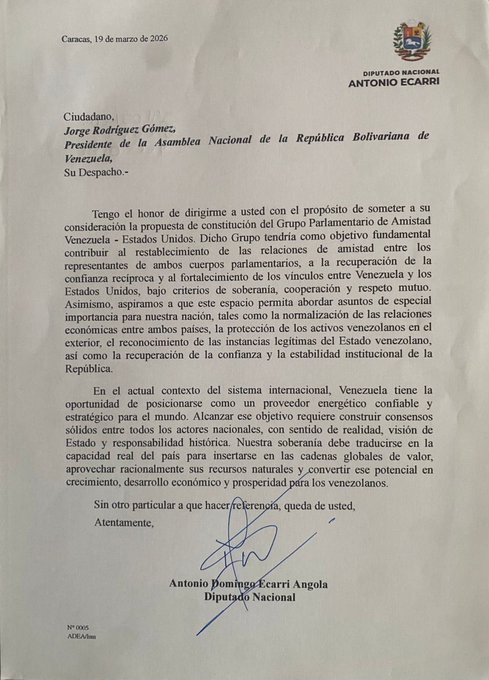
On the legislative front, Venezuela’s National Assembly approved the creation of a U.S.–Venezuela friendship group, promoted by Congressman Antonio Ecarri and supported enthusiastically by Assembly President Jorge Rodríguez—an indication of growing interest in structured parliamentary diplomacy.
Washington formalizes its Venezuela policy track
Beyond executive engagement, Congress is beginning to formalize the U.S. approach.
The House Foreign Affairs Committee advanced bipartisan legislation requiring Secretary of State Marco Rubio to present a comprehensive strategy to support a democratic transition in Venezuela.
The vote—overwhelming but not unanimous—signals both consensus and residual division. Unclear if this will move on to a floor vote and into the Senate, it does reflect the concerns many have in Capitol Hill. More importantly, it reflects a structural shift: Venezuela policy is becoming institutionalized within Congress.
This increases oversight over sanctions, diplomacy, and transition benchmarks, and reduces reliance on purely executive discretion.
For Caracas, engagement now operates across a multi-layered U.S. policy framework, adding both opportunity and constraint.
Sanctions architecture evolves: oil and mining in focus
Recent OFAC actions expand the controlled reopening of Venezuela’s extractive sectors:
GL55: authorizes negotiation and entry into contingent contracts for future mining investments (including gold), pending specific approval for execution.
GL51A: permits transactions involving Venezuelan-origin minerals (including gold)—export, transport, and sale—under strict compliance, jurisdictional, and reporting requirements.
GL54: allows provision of goods, services, and technology necessary for mining operations, including maintenance, logistics, and operational support.
These licenses do not lift sanctions. They create a framework for conditional, reversible engagement, extending to mining the same phased approach already applied to oil.
Courts as a fourth arena of the transition
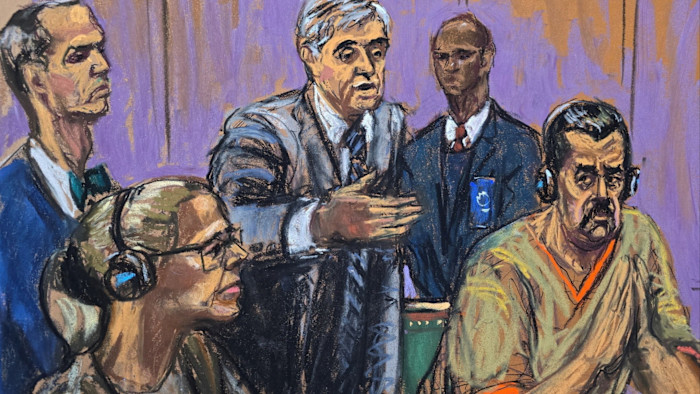
The Maduro-Flores case: In New York, the court confirmed that the case will proceed. A key unresolved issue is whether Nicolás Maduro can access state resources to fund his defense. Prosecutors argue he cannot, citing U.S. non-recognition and OFAC sanctions. The judge is expected to examine this closely.
The Rivera case: A separate case has drawn attention due to testimony by Marco Rubio and opposition figure Julio Borges, former president of the National Assembly in Venezuela, highlighting the intersection between legal proceedings and U.S.–Venezuela policy dynamics.
The CECOT migrant lawsuit: A Venezuelan migrant has filed suit alleging unlawful detention linked to transfers through El Salvador’s CECOT facility. While currently an individual case, it could establish broader legal exposure depending on judicial outcomes.
Taken together, the three cases—the prosecution of Maduro and Flores in New York, the migrant lawsuit over detention and transfer to CECOT, and the Rivera trial in Miami—reveal that Venezuela’s transition is no longer confined to diplomacy, markets, or domestic politics. It is increasingly being adjudicated in U.S. courts.
Each case targets a different layer of accountability:
- Leadership accountability (Maduro–Flores).
- Policy accountability (migration enforcement).
- Influence accountability (lobbying and backchannels).
But their combined effect is larger than their individual outcomes. They embed Venezuela policy within the U.S. legal and institutional system, where sanctions, executive authority, congressional oversight, and judicial scrutiny intersect.
This dynamic extends beyond criminal and civil litigation. The ongoing creditor actions in U.S. courts—most notably the process that could lead to the forced sale of CITGO, Venezuela’s most valuable foreign asset—underscore how financial claims are also being resolved judicially, with potentially irreversible consequences for the country’s future economic recovery.
In Washington, this creates both constraint and durability. Policy is no longer solely a matter of political discretion—it is being shaped by legal processes that are slower, more rigid, and harder to reverse.
Venezuela’s future is now being shaped not only in Caracas and Washington—but in courtrooms and creditor dockets.
Social pressures and political expectations
Economic stabilization has not eliminated social strain.
Inflation’s cumulative impact, weak public services, and rising expectations for political change create a fragile equilibrium. Polling suggests strong demand for elections within a year—expectations that may outpace political sequencing.
Debt, investment, and the limits of optimism
Bond markets have rallied sharply, pricing in significant recovery. Yet structural constraints remain: Debt restructuring depends on political normalization. Investment requires institutional guarantees still absent. Oil recovery demands sustained capital over time.
The result: a bullish narrative increasingly misaligned with political timelines.
Conclusion: acceleration meets constraint
Venezuela is moving—economically, diplomatically, and institutionally. But not at the same speed.
Markets are accelerating. Diplomacy is reopening. Institutions are adjusting. Yet the transition remains incomplete, its timeline uncertain, and its foundations fragile.
The direction is constructive. But the pace—ultimately—will be set by politics.